
Ghostbusters Group Costumes: The Exact Gear Details That Make or Break Your Team

 Costumes & Makeup
Coordinating authentic uniform textures and gear creates an unmistakable team presence.
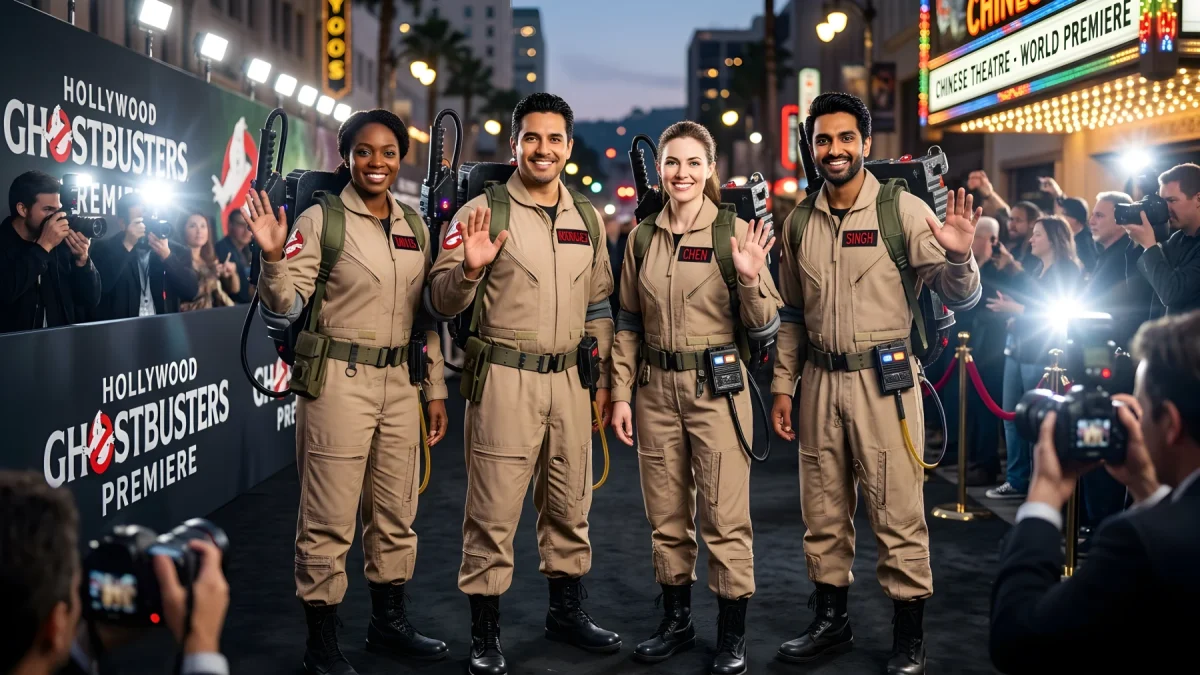
Executing unmatched Ghostbusters group costumes requires far more than slipping into generic khaki jumpsuits; true team cohesion hinges on matching fabric tones, uniform nametape placements, and synchronized gear weathering. When a squad lines up with standardized flight suits, accurate military belts, and correctly scaled proton packs, individual outfits transform into a seamless, cinematic ensemble that instantly commands attention.
The secret to convincing group cosplay lies in collective discipline. While individual members often gravitate toward customizing their own gear, minor discrepancies in fabric weave, patch tint, or belt style disrupt visual continuity and break the illusion of an organized squad. Establishing ground rules early prevents your crew from looking like four strangers who coincidentally bought gear from different clearance racks.
Before buying or stitching your first item, aligning on uniform fundamentals ensures your team captures the grounded, industrial aesthetic that defines paranormal investigation crews across film, fan franchises, and charity organizations.
The Uniform Core: Fabric, Fit, and Tone Consistency
The foundation of every group appearance is the flight suit. The classic cinematic design relies on military-spec CWU-27/P flight suits or poly-cotton boiler suits, traditionally finished in khaki, desert tan, or slate gray. The primary pitfall for groups is shade drift: one member orders bright beige, another buys deep khaki, and a third wears olive drab.
To establish visual unity, select a single supplier or dye lot for your entire team’s base layer. Poly-cotton blends provide breathable structure, while ripstop or Nomex weaves offer authentic military heft. If your team sources surplus military coveralls, running them through a uniform dye cycle together harmonizes subtle tone differences and yields a weathered, field-tested appearance.
Sizing should balance utility and comfort. A proper field uniform accommodates comfortable layering underneath while allowing full range of motion when carrying heavy rear hardware. Cuffing the pant legs neatly over standard tactical combat boots grounds the silhouette and ensures uniform height lines when your crew stands shoulder-to-shoulder.
A common mistake in practice is treating group uniforms as individual projects, leading to clashing fabric weights and mismatched hardware that break visual cohesion.
Insignia and Customization: Aligning the Team Identity
Uniform details serve as the connective tissue that signals your crew belongs to the same department. Placement, sizing, and stitching must remain mathematically precise across every member’s chest and shoulder.
The iconic red-and-white “No-Ghost” patch belongs strictly on the right shoulder, centered approximately an inch below the shoulder seam. The standard nametag, finished in black canvas with red block embroidery, sits centered directly above the left breast pocket at a slight diagonal or strictly horizontal angle depending on your era of choice.
Balancing Canon Character Names vs. Real Team Names
Groups face an immediate choice: portray the classic cinematic quartet (Venkman, Stantz, Spengler, Zeddemore) or adopt an original squad identity featuring personal surnames. Either approach works remarkably well, provided the team commits universally. Mixing two canonical names with two real family names creates visual confusion and undermines team immersion.
- Textile specifications: Standard black twill fabric tape measuring roughly two inches in height by four to five inches wide.
- Lettering format: Bold red block embroidery, sized consistently across all patches regardless of name length.
- Sleeve placement: High-definition woven or embroidered right-shoulder patches aligned identically across all members.
- Leg hose connector: Clear or frosted surgical tubing attached to a rubber belt-hose connector on the lower left torso.
Hardware and Equipment: From Proton Packs to Belt Rigs
The visual impact of Ghostbusters group costumes peaks when the team turns around to reveal their back-mounted hardware. Proton packs are heavy focal points, meaning dramatic scale differences—such as one member wearing a 1:1 scale fiberglass shell while another sports a lightweight foam miniature—will instantly unbalance the lineup.
Belts anchor the bottom half of the equipment profile. Genuine pistol belts or LC-2 style webbing in white, olive, or khaki provide structural support for heavy side gear. Equipping every member with key fobs, radio holsters, and belt gizmos gives the group a fully operational utility vibe that standard store-bought outfits lack.
| Gear Component | Team Standardization Standard |
|---|---|
| Flight Suit Fabric | Uniform tan or gray tone with matched leg cuffs and front-zipper closure |
| Shoulder & Chest Patches | Identical dimensions, thread sheen, and placement measurements |
| Web Belt System | Pistol belt with standardized leather key fobs and uniform hose connections |
| Proton Pack Scale | Consistent proportions (preferably full-scale shells mounted on ALICE frames) |
| Footwear Profile | Black tactical work boots with bloused or tucked pant cuffs |
Myth vs. Reality: Group Cosplay Coordination

A widespread misconception is that purchasing expensive prop replicas is the only way to make a group outfit look convincing. In practice, visual alignment matters far more than individual prop budgets.
A group wearing budget flight suits with identical weathering, matching belts, and synchronized nametags consistently outshines a group where one person has a multi-thousand-dollar custom rig while three others wear unironed, out-of-the-bag nylon costumes. Coordinated weathering—applying subtle dust, grime, and grease marks in the same artistic style—creates an authentic working-crew appearance that hides material limitations.
- Agree on the era: Decide whether your squad is built around the original 1984 aesthetic, the dark flight suits of 1989, or modernized tactical setups.
- Standardize the utility belt: Ensure every member sports the same belt width and hose attachment points to guarantee uniform waistlines.
- Synchronize weathering: Gather your squad for a group weathering session, using fabric mist, acrylic washes, or fullers earth to age all suits equally.
- Align harness mountings: Fasten pack harnesses to genuine military-style pack frames so every pack rides at the same shoulder height.
Uniformity in basic utility gear communicates an authentic working crew far more effectively than isolated, ultra-expensive prop pieces.
Step-by-Step Execution: Preparing the Squad for the Field
Bringing your crew together for an event requires structured preparation. Follow these practical steps to coordinate your gear and ensure everyone hits the floor looking sharp:
- Step 1: Coordinate source materials early. Order flight suits in bulk from the same manufacturer or surplus supplier to prevent color variations.
- Step 2: Install matching patch sets. Use iron-on backing reinforced with perimeter stitching so patches do not peel under strap friction.
- Step 3: Fit the pack frames. Adjust the shoulder straps and kidney pads on each harness while wearing the suit to guarantee comfortable weight distribution.
- Step 4: Conduct a group gear check. Assemble the full lineup before your event to inspect hose lengths, nametag angles, and belt sag under live movement.
💡 Start your team coordination by locking down a single suit supplier before buying secondary accessories.
🔍 Audit your patches and belt accessories together to ensure the squad maintains complete visual balance.
📌 Standardize your pack scaling so your group presents a clean, cohesive line from every angle.
👇 What gear choices does your crew prioritize to stay unified? Share your team build setups in the comments below!