
Red Rhinestone Carrie Makeup: How Crimson Crystals Are Reinventing Horror’s Most Iconic Prom Look

 Costumes & Makeup
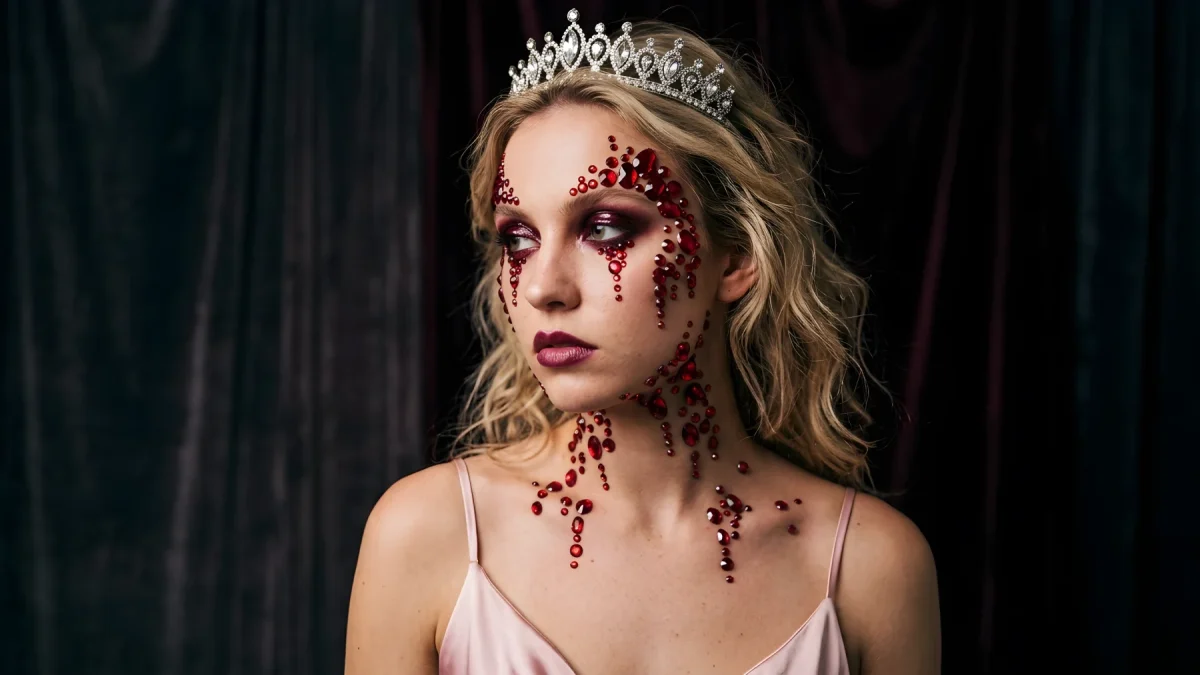
Faceted crimson gems offer a dimensional, mess-free alternative to traditional theatrical stage blood.
Replacing stage blood with faceted crimson gems transforms classic Carrie makeup into an elevated, editorial statement that bridges vintage horror cinema with red-carpet glamour. By swapping liquid theatrical syrup for light-catching crystals, this modern adaptation captures the unforgettable silhouette of Stephen King‘s tragic prom queen while eliminating the sticky mess and staining hazards of traditional special effects.
The iconic visual—originally defined by Brian De Palma‘s 1976 film adaptation—relies on an unmistakable downward cascade from hairline to collarbone. Translating that dramatic spill into rhinestone art requires precise spatial planning and cosmetic-grade bonding agents to ensure the stones catch ambient light from every angle.
From Theatrical Splatter to Editorial Precision
Traditional special effects rely heavily on corn syrup bases and red food dyes, which inevitably smear, transfer onto clothing, and break down base foundation within hours. In contrast, gem-based embellishments retain their structural integrity throughout long evenings and photography sessions, turning a gruesome horror staple into high-fashion beauty.
The visual impact hinges entirely on gradient sizing. Makeup artists mimic the natural fluid dynamics of a splash by clustering larger stones near the crown of the head, tapering down to micro-crystals that evoke delicate splatters across the cheekbones and decolletage.
A common mistake in dimensional embellishment is using uniform jewel sizes, which flattens the visual depth; realistic movement demands varying stone diameters from large focal pieces down to pinpoint accents.
Adhesives, Skin Safety, and Proper Placement
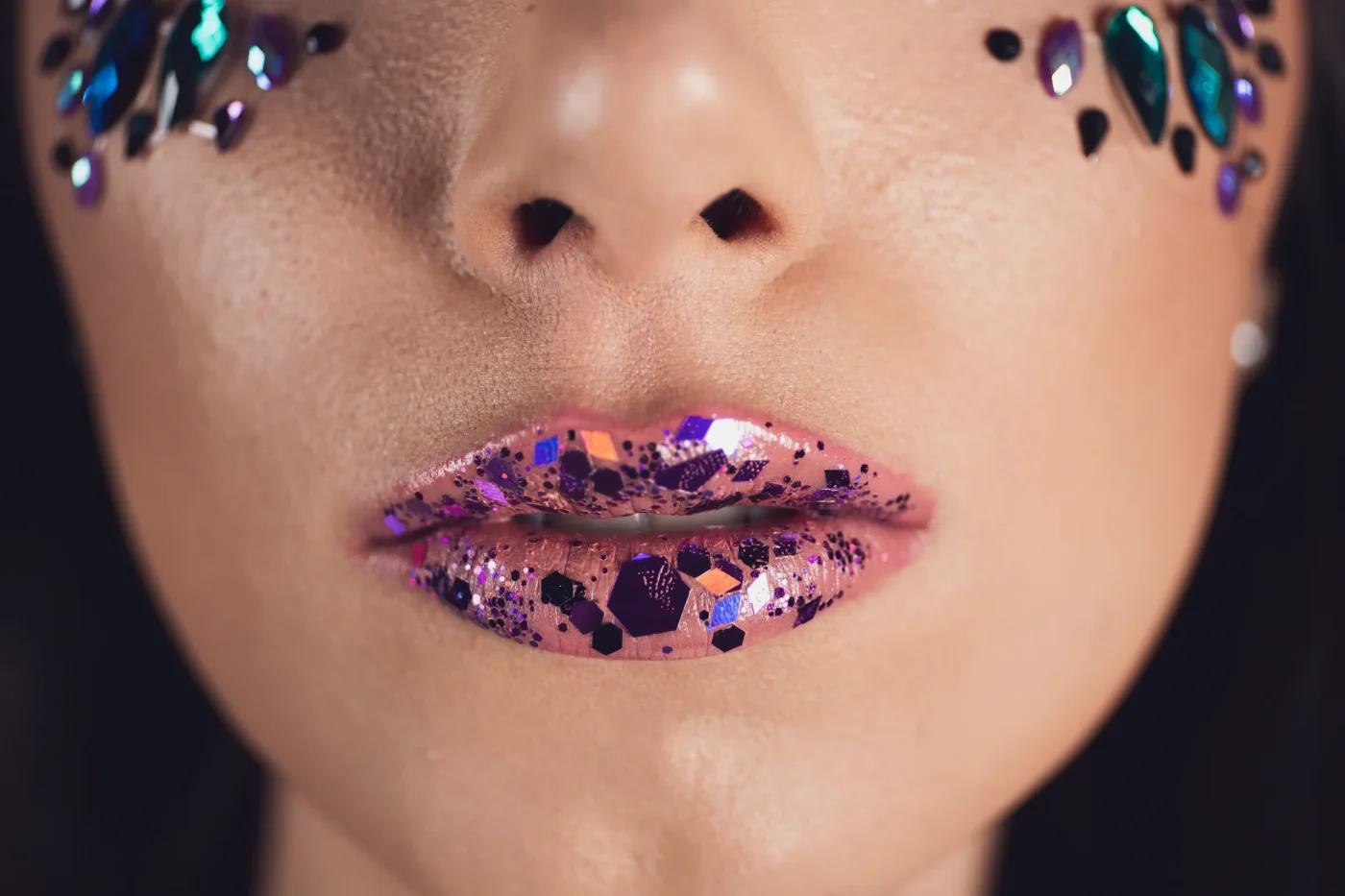
Securing dozens of acrylic or glass gems directly to facial skin requires careful product selection. Standard craft glues contain harsh industrial solvents that can trigger severe contact dermatitis or allergic reactions on delicate skin barriers.
The Food and Drug Administration (FDA) oversees cosmetic ingredients distributed across the United States, emphasizing the importance of using only products tested for dermal use. Professional artists rely primarily on latex-free lash adhesives for lightweight acrylic gems or medical-grade pros-aide for heavier glass stones that must stay locked in place through heat and sweat.
Step-by-Step Crystal Application
- Prep the canvas: Cleanse skin thoroughly to eliminate natural surface oils, then apply a long-wear, matte foundation base set with translucent powder.
- Map the flow: Use a neutral red lip pencil to sketch faint guides illustrating where the crimson stream will travel down the forehead and temples.
- Anchor the focal points: Apply cosmetic adhesive to the backs of larger 4mm to 6mm gems, placing them densely along the hairline and around the tiara line.
- Fade into droplets: Transition to 2mm and 3mm rhinestones down the bridge of the nose, cheeks, and chin, spacing them farther apart to emulate fluid dispersion.
- Seal the look: Mist the completed face with an alcohol-free setting spray to lock the base makeup without clouding the faceted surfaces of the stones.
Technique Comparison: Fake Blood vs. Rhinestones
Choosing between classic theatrical fluid and dimensional crystals depends on your performance requirements, photography needs, and comfort preferences.
| Criterion | Rhinestone Method |
|---|---|
| Durability | Resistant to smudging, melting, and sweat when applied with cosmetic-grade pros-aide. |
| Wardrobe Safety | Zero risk of dye transfer onto vintage prom dresses, silk fabrics, or lace collars. |
| Photography Impact | Reflects flash and direct lighting dynamically, producing sharp, high-contrast images. |
| Skin Removal | Peels off cleanly with oil-based cleansers, leaving no stubborn crimson residue. |
| Application Time | Requires 45 to 90 minutes of meticulous tweezers work and strategic mapping. |
Debunking Common Embellishment Myths

A widespread misconception suggests that glass flat-back crystals are too heavy for all-night wear. High-grade cosmetic skin adhesives can easily support multifacted glass rhinestones up to 7mm for eight to twelve hours without sagging, provided the underlying skin has been fully degreased beforehand.
Another myth assumes that rhinestones must replace makeup entirely. The most striking renditions use deep berry or scarlet cream eyeshadows blended softly beneath the gem clusters, creating an illusion of depth and shadow that makes the rhinestones appear suspended in liquid.
💡 Start your mapping from the hairline downward so your hand never brushes against freshly placed gems while working down the face.
🔍 Opt for AB-coated red crystals if you want extra holographic shifts that catch cool flash photography alongside warm venue lighting.
📌 Keep an oil-free micellar water handy on a fine cotton swab to instantly clean adhesive residue from the tops of your stones after application.
👇 Leave your thoughts in the comments below and share how you adapt classic cinematic looks with modern beauty techniques.