
The Haunt Industry Secret That Turns an Ordinary Yard Into a Walk-Through Scare Zone

 Halloween Decor
Layered ground fog and directional colored lighting turn standard lawns into theatrical haunted walk-throughs.
Transforming a suburban lawn into a convincing **yard haunted house** requires a fundamental shift from buying scattered novelty props to deploying commercial atmospheric staging: combining chilled ground-level fog with directional, two-tone lighting. Commercial scare parks demonstrate that controlling what visitors can and cannot see immediately erases the familiar geometry of a neighborhood property.
Static plastic skeletons and inflatable figures quickly lose their novelty when illuminated by flat, ambient streetlights. High-end haunted attractions operate on theatrical principles, hiding boundaries and establishing immersive sightlines before introducing any scare element.
Why Random Props Fail Where Commercial Haunts Succeed
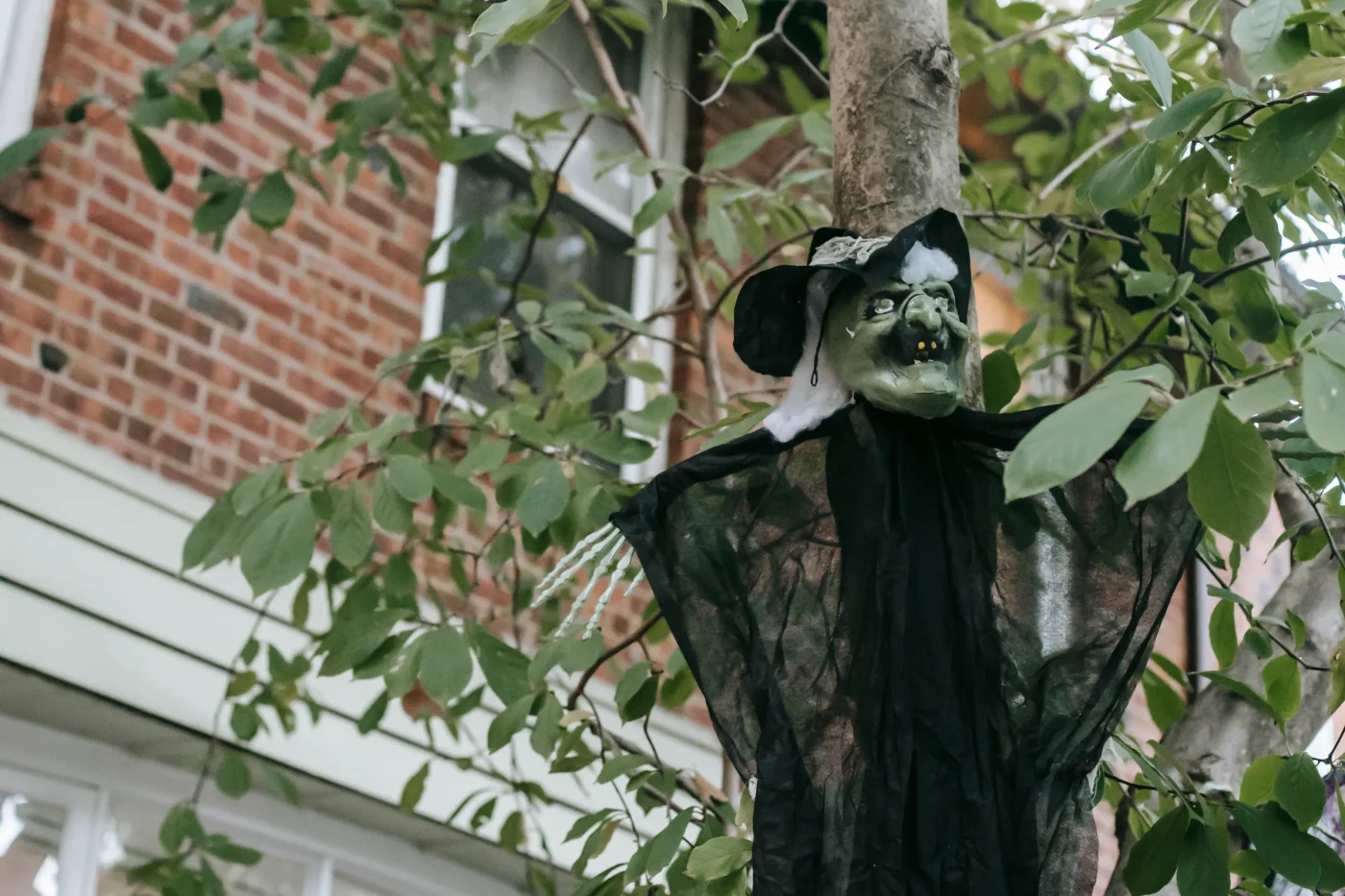
Many seasonal decorators believe that packing a lawn with dozens of individual decorations will overwhelm visitors into feeling terrified. In practice, visual clutter simply looks like an outdoor retail aisle, allowing trick-or-treaters to visually process every item before stepping onto the walkway.
Commercial scream parks approach spaces with strict spatial cohesion. Attractions like Markoff’s Haunted Forest in Maryland rely on controlled pathways, lighting, and ambient soundscapes to disorient guests, rather than relying solely on store-bought lawn props. When visitors cannot easily gauge where a path begins or where an open yard ends, psychological tension builds naturally.
A common mistake in home haunt staging is illuminating the entire yard with flat floodlights, which washes out the shadows that build psychological suspense.
Professional hardware also demonstrates the power of targeted focal points over scattered clutter. High-end pieces—such as Distortions Unlimited‘s 11-foot animated Sleeping Giant priced at $14,750, or motion-based installations like Thrill Builders’ $9,999.95 Hellevator—anchor entire walkthrough zones. A home setup does not require a five-figure investment, but it must borrow the same philosophy: pick one dominant focal feature and design the environment around it.
The Definitive Atmospheric Upgrade: Chilled Low Mist and Targeted Shadows
The single most dramatic technical upgrade for an outdoor display is the installation of a fog chiller system. Standard consumer fog machines eject heated vapor that immediately rises into the air and dissipates into the wind. Commercial haunts force fog through an insulated ice chamber, dropping the temperature of the vapor so it stays dense and hugs the lawn like heavy cemetery ground mist.
This dense layer serves a functional purpose beyond appearance. Ground-level fog obscures familiar lawn features, sidewalks, and property lines, instantly making a known space feel vast and uncertain.
Controlling the Eye With Color Temperature
Once the ground plane is obscured, lighting must be built in deliberate layers rather than broad washes. The most effective approach utilizes high-contrast color pairings, such as deep blue or violet floodlights for background shadows paired with sharp amber or toxic green spotlights aimed directly at centerpieces.
This deliberate contrast forces the human eye to track specific points while leaving the surrounding fog dark. When guests step between brightly lit focal points and dense, shadowed pockets, the yard suddenly feels like an engineered maze.
| Standard Yard Display | Atmospheric Haunt Staging |
|---|---|
| Overhead white or warm floodlights | Low-angle blue washes with targeted accent spots |
| Rising, fast-dissipating fog clouds | Chilled, ground-hugging continuous mist layer |
| Disjointed collection of unrelated props | Single thematic palette anchored by one focal piece |
| Silent lawn or generic holiday pop tracks | Subtle low-frequency drone and targeted audio cues |
How to Execute the Upgrade Step-by-Step

Achieving a professional walk-through aesthetic requires structuring the display to dictate visitor movement. Building tension relies on controlling pace and discovery.
- Map the approach: Guide foot traffic along a deliberate curve using realistic tombstones or physical path markers, preventing visitors from seeing the entire setup at once.
- Build or connect a fog chiller: Attach a low-temperature cooling box filled with ice blocks to a fog machine output to guarantee ground-hugging vapor.
- Establish low-angle lighting: Stake compact LED spotlights low to the turf, aiming upward into trees, walls, or props to cast elongated shadows against structural surfaces.
- Introduce hidden soundscapes: Conceal weather-resistant audio units inside foliage to play low-frequency atmospheric hums rather than loud, repetitive novelty sound effects.
- Position a singular focal scare: Place your primary animatronic or detailed centerpiece at a natural turn along the path where it emerges through the mist.
Layering these elements converts an ordinary front yard into a cinematic environment that commands attention from the curb to the front door.
💡 What atmospheric upgrades have made the biggest difference in your seasonal display?
🔍 Experimenting with ground-lying fog and focused shadow angles can completely alter how visitors perceive your space.
📌 Share your experiences with us and leave your thoughts in the comments below.