
Why a Cheese-Filled Pumpkin Is the Ultimate Showstopping Halloween Centerpiece

 Halloween Food & Parties
A whole roasted pumpkin filled with molten cheese serves as an edible centerpiece for autumn gatherings.
A whole roasted cheese-filled pumpkin functions as both an edible serving vessel and a rich fondue, delivering molten alpine cheese, toasted crusty bread, and tender roasted squash flesh straight to your Halloween party table. By baking cheese and savory aromatics directly inside a hollowed squash, you create a self-contained warm dip that stays insulated for serving throughout the evening.
The culinary physics behind this seasonal dish rely on the dense shell of the gourd, which acts as a natural Dutch oven. As heat penetrates the thick skin, the interior cream simmers, gently emulsifying sharp cheeses while steaming the inner walls into a velvety custard. Guests can dip long skewers or simply drag toasted bread against the soft interior walls to pull away sweet squash along with stringy, bubbling cheese.
Setting up this showstopper requires minimal prep time compared to elaborate finger foods, yet it makes a dramatic visual statement on any buffet spread. Choosing the right gourd and understanding how moisture interacts with melted dairy is essential to keep the dish from turning watery.
Selecting the Proper Squash: Carving Variety vs. Culinary Baking
A widespread misconception among holiday hosts is assuming any orange pumpkin from the patch will bake successfully. Standard jack-o’-lantern pumpkins are bred specifically for thin walls, hollow interiors, and easy knife carving. When exposed to prolonged oven heat, their fibrous flesh releases excess water and collapses into a soggy puddle.
A common mistake in home preparation is using standard carving pumpkins, which release excess moisture during roasting and dilute the melted cheese into a thin, watery liquid.
Culinary varieties provide the thick, dense flesh and natural sugars required to complement pungent cheeses. Sugar pumpkins, pie pumpkins, red kuri squash, and kabocha squashes feature lower water content and fine-grained flesh that tenderizes without losing structural integrity.
| Squash Variety | Culinary Performance |
|---|---|
| Sugar / Pie Pumpkin | Balanced sweetness, sturdy shell, smooth inner flesh |
| Kabocha Squash | Dense, nutty texture with minimal moisture release |
| Red Kuri | Vibrant chestnut flavor with a tender, edible outer rind |
| Jack-o’-Lantern Pumpkin | High water content, stringy texture, prone to collapsing |
The Science of the Cheese Melt
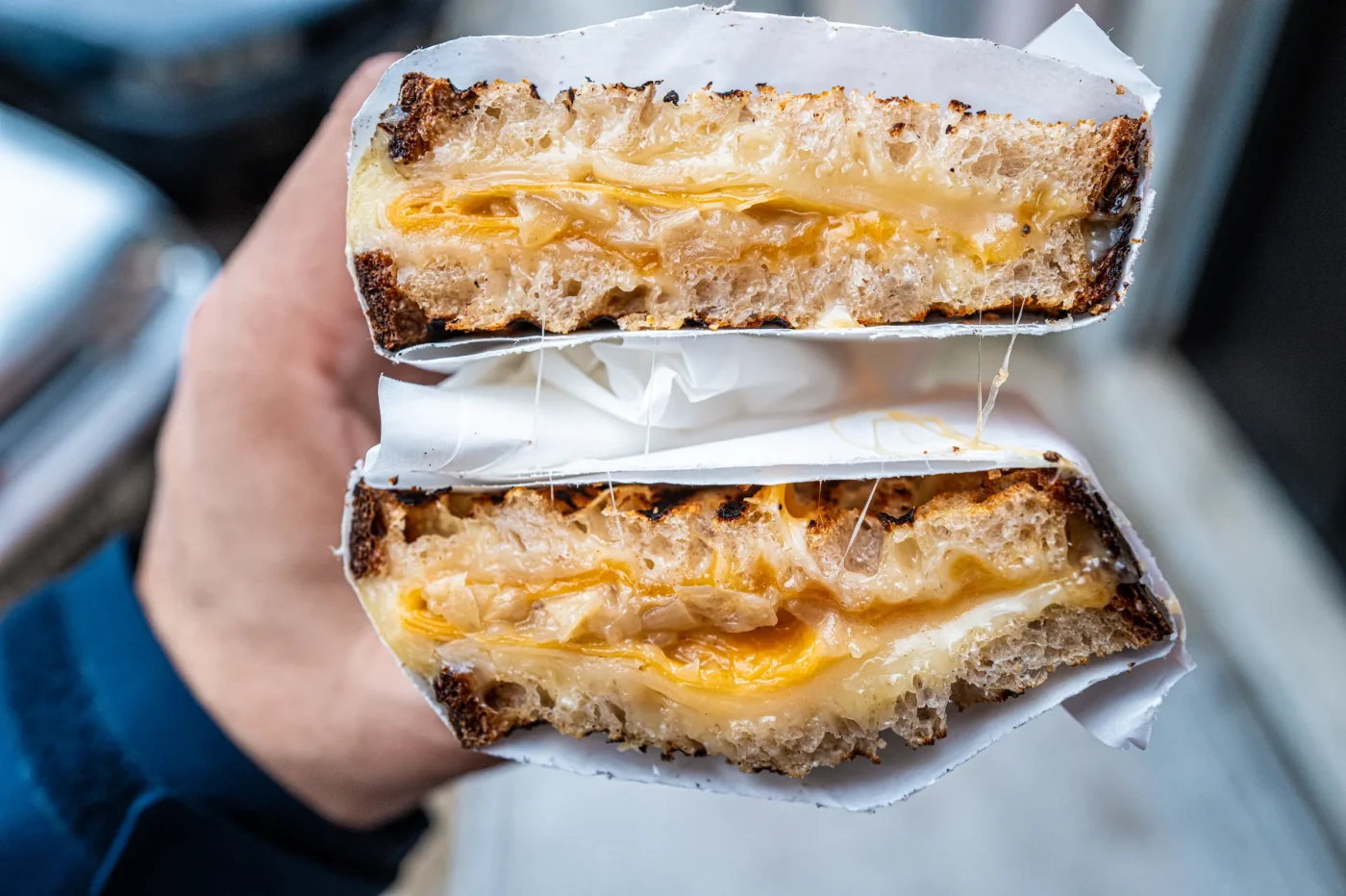
Balancing high-moisture liquids and aged dairy prevents separation under direct baking temperatures. Combining cheeses with complementary melting points ensures a smooth consistency without greasy oil slicks pooling on the surface.
Building the Optimal Blend
Gruyère and Emmental provide the foundational elasticity, offering nutty complexity and dependable melt characteristics. Layering in sharp white cheddar or aged Gouda introduces acidic bite to cut through the heavy cream, while a small measure of cream cheese or crème fraîche stabilizes the emulsion.
Tossing shredded cheese with a light dusting of cornstarch or all-purpose flour prior to assembly prevents proteins from tightening and squeezing out fat. Seasoning the interior cavity with grated nutmeg, cracked black pepper, and minced garlic infuses the dairy with classic autumn warmth.
Step-by-Step Preparation for Party Service
Executing a reliable cheese-filled pumpkin requires balancing internal steam with external roasting heat so the shell softens at the same pace the interior melts.
- Prep the gourd: Slice a clean, level lid off the top of a 3- to 4-pound pie pumpkin and thoroughly scrape out all seeds and fibrous strings using a sturdy metal spoon.
- Season the interior: Rub the hollowed cavity with kosher salt, black pepper, and a thin sheen of olive oil to draw out excess surface moisture before filling.
- Layer bread and cheese: Alternate layers of toasted sourdough cubes, shredded melting cheeses, minced garlic, and fresh thyme leaves until the cavity is loosely packed to the brim.
- Pour the cream base: Slowly drizzle heavy cream or a mixture of cream and vegetable broth over the layers until liquid settles just below the inner rim.
- Bake thoroughly: Place the pumpkin on a rimmed baking sheet lined with parchment paper, replace the cap, and bake at 375°F (190°C) for approximately 60 to 75 minutes until a knife slides easily through the outer wall.
Serving Safely and Keeping Temperatures Stable

Dense squash walls naturally insulate warm fondue, keeping dairy heated significantly longer than open ceramic cookware. In adherence to standard USDA food safety guidance for perishable dairy, hot buffet foods should remain at or above 140°F during presentation, or be consumed within two hours at room temperature.
For extended Halloween gatherings, resting the finished pumpkin atop a preheated cast-iron trivet or insulated serving board preserves core heat throughout the party. Offer sturdy dippers such as pretzel crisps, sliced honeycrisp apples, roasted bratwurst coins, and cornichons so guests can easily maneuver through the molten center.
💡 Transform your table this autumn by turning whole seasonal produce into an interactive, edible centerpiece.
🔍 Pair distinct cheeses like Gruyère and sharp cheddar to keep the fondue stable, flavorful, and dipping-ready.
📌 Plan prep ahead to ensure baking times align seamlessly with the arrival of your party guests.
👇 Share your favorite cheese combinations and autumn party ideas in the comments below!