
Pop Art Halloween Makeup: How to Master the Comic-Book Look

 Costumes & Makeup
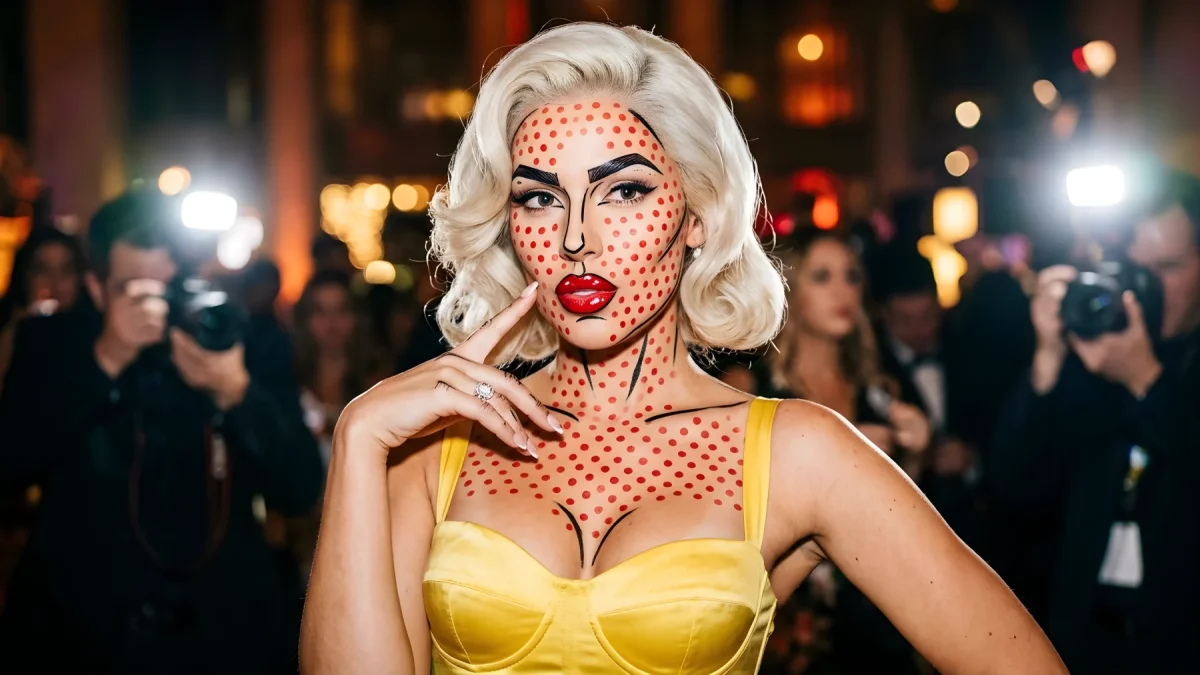
Graphic black outlines and uniform dot matrices transform facial features into a living vintage comic frame.
Transforming your face into a living comic panel requires three precise elements: stark graphic cell-shading lines, saturated primary pigments, and a uniform matrix of Ben-Day dots. Rooted in the visual vocabulary of mid-century commercial printing and popularized by Roy Lichtenstein’s iconic Pop Art paintings, this visual effect flattens three-dimensional human facial anatomy into a striking, two-dimensional graphic print. With Lichtenstein’s visual legacy returning to center stage in major American museum exhibitions, the unmistakable style remains one of the most visually arresting choices for Halloween.
Achieving this classic print illusion does not require theatrical training, but it demands an understanding of graphic contrast. By replacing natural skin gradients with hard, deliberate lines and mechanical dot patterns, you effectively trick the human eye into reading bone structure as ink on newsprint.
The Lichtenstein Blueprint: Why the Comic Illusion Works
Traditional beauty makeup works to blend, soften, and diffuse contours to enhance natural depth. Pop Art Halloween makeup does the exact reverse. It eliminates soft transitions in favor of sharp demarcations, imitating the mechanical halftone printing processes used in vintage American pulp comics.
Lichtenstein built his career by isolating mass-media panels, amplifying their commercial aesthetics, and blowing up four-color printing artifacts into fine art. When translated to facial makeup, your natural features become structural framing elements. The bridge of the nose, the jawline, the cheek hollows, and the collarbones are traced in saturated black pigment to simulate the heavy ink contours of a commercial comic illustrator.
The secret to a convincing comic-book face is absolute line discipline; soft smudges ruin the illusion of mechanical print, while sharp, opaque strokes create instant graphic impact.
The hallmark of the style is the Ben-Day dot pattern. Named after illustrator Benjamin Day, this technique originally used tightly grouped colored dots to economically simulate secondary tones without expensive solid inks. On skin, these uniform dots supply tone and texture while instantly communicating retro print authenticity.
Myth vs. Reality: Debunking Comic-Style Application
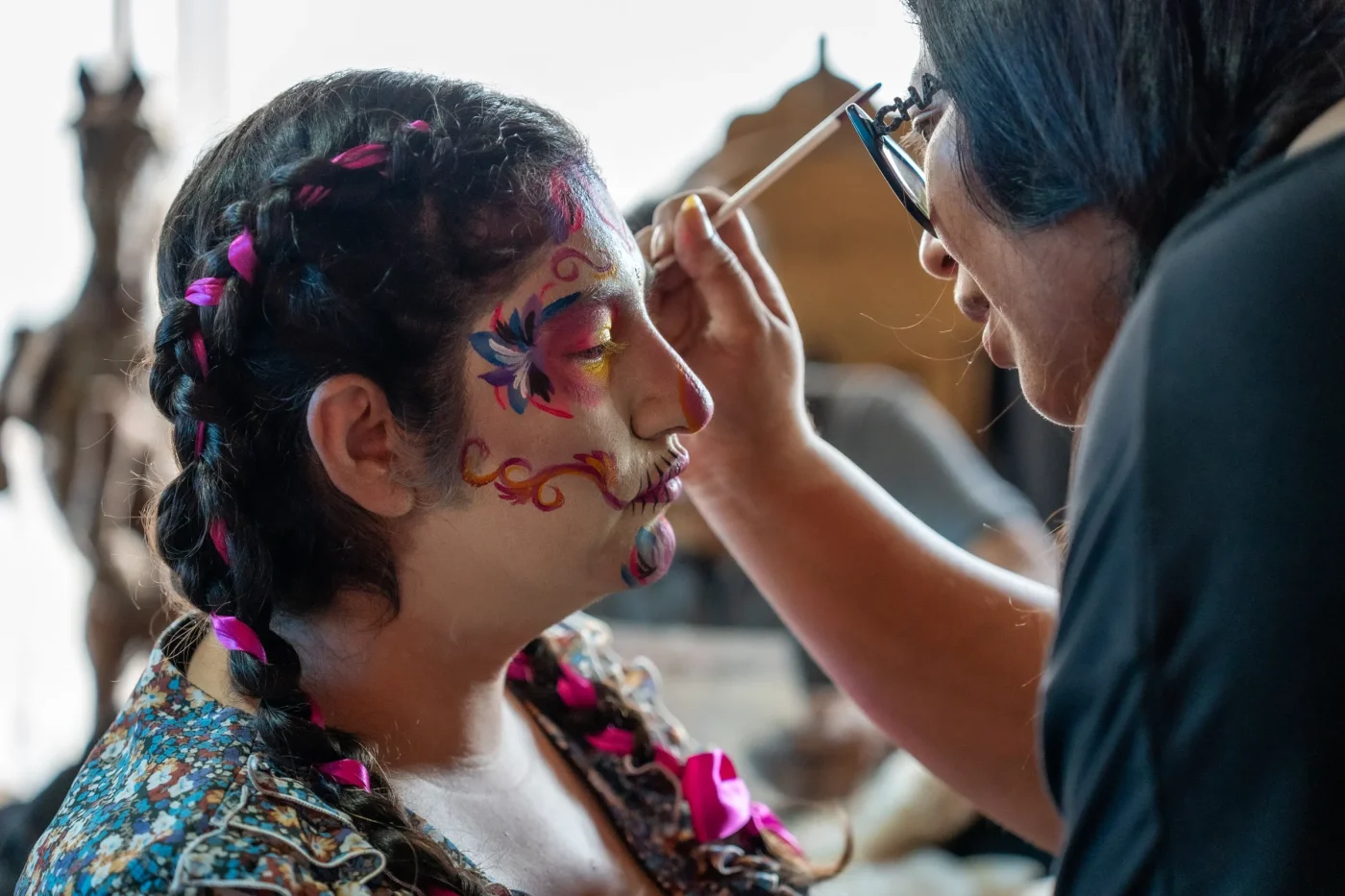
Many first-time creators assume that achieving authentic comic makeup requires liquid latex or rigid professional face paint kits. In practice, rigid paints crack across mobile expression lines within an hour of wear. Cosmetic-grade cream formulations or water-activated cake liners flex with skin movement without flaking off.
Another widespread misconception is that Ben-Day dots must be drawn by hand using a fine-tipped eyeliner brush. Freehand dotting almost inevitably leads to inconsistent spacing and irregular circle sizes, breaking the illusion of mechanical duplication. Precision tools—such as the flat wooden end of a makeup brush, the tip of a cotton swab, or a clean pencil eraser—create uniform, stamped circles across the forehead, cheeks, and neck with minimal effort.
Step-by-Step Guide to the Living Comic Book Face
Executing this graphic aesthetic requires a methodical sequence. Working out of order risks smudging detailed linework when applying base pigments or dot patterns.
- Establish a Flat Matte Base: Apply a full-coverage, matte foundation across the entire face, neck, and ears. Set thoroughly with translucent powder to eliminate shine, ensuring that incoming line work will not bleed into oil-rich zones.
- Map the Structural Inking: Using a waterproof, felt-tip black liquid eyeliner or a high-pigment cake liner, outline key facial architecture. Trace down the sides of the nose, along the jawline, over the collarbones, and around the perimeter of the face. Carve out stylized, exaggerated eyebrows with bold, graphic angles.
- Stamp the Ben-Day Dot Matrix: Choose a single vibrant hue, traditionally bright red or bubblegum pink. Dip the flat end of a brush handle into water-activated paint and press straight onto the skin in diagonal, evenly spaced rows across the cheeks, forehead, and neck. Maintain consistent pressure to guarantee identical dot diameters.
- Detail the Eyes and Comic Tears: Draw a thick winged cat-eye, then outline the lower lash line with black ink. For a classic melodrama aesthetic, map a stylized tear running down one cheek using sky-blue pigment, framed by a crisp black border and an interior white highlight.
- Execute Comic Lips: Paint lips with an opaque, saturated crimson lipstick. Outline the outer perimeter in stark black, sketch a vertical crease line down the center of the bottom lip, and add a small curved dab of pure white paint on the lower lip to simulate printed paper glare.
Choosing the Right Formulations for Graphic Wear
Selecting formulas that balance high pigment saturation with sweat resistance determines whether the design survives an entire evening. The wrong consistency leads to feathered lines that destroy the graphic silhouette.
| Element | Optimal Formula |
|---|---|
| Black Outlines | Waterproof matte liquid eyeliner or professional cake liner |
| Ben-Day Dots | Water-activated cosmetic paint applied with a solid stamp tool |
| Base Canvas | Full-coverage oil-free matte foundation set with loose powder |
| Highlights & Glare | High-opacity white cosmetic cream or liquid pigment |
| Comic Lip Base | Transfer-proof liquid matte lipstick in primary red |
Locking Down the Finished Illustration
Because comic makeup depends entirely on stark contrast, any sebum breakthrough or accidental smudge can soften edges that should remain razor-sharp. Once all layers are dry, mist the entire face with a film-forming cosmetic setting spray. Avoid oil-based finishing mists, which degrade water-activated pigments and cause crisp black outlines to run.
💡 Prep your skin thoroughly with an oil-controlling primer before laying down base pigment to keep your canvas completely matte.
🔍 Test your stamping tool on your forearm first to find the exact pressure needed for clean, perfectly round dots.
📌 Keep a precision cotton swab handy dipped in micellar water to clean up any wobbles along your graphic black outlines.
👇 Which classic comic look are you recreating this season? Share your favorite technique and color palette in the comments below!