
Why a Faux-Crow Display Seamlessly Bridges Your Fall Decor from Halloween Into November

 Halloween Decor
Realistic faux crows offer a versatile bridge between early autumn displays and late harvest tablescapes.
A well-styled faux-crow display solves one of the most frustrating dilemmas in seasonal home design: the abrupt visual expiration date of late October decorations. By anchoring your seasonal arrangements around corvid motifs rather than single-night novelty props, you create an intentional aesthetic bridge that carries smoothly into Thanksgiving without requiring a complete design overhaul.
Black corvids serve a dual purpose in American decorative traditions. In early autumn, they project gothic drama and playful mystery, while in November, their identity shifts toward agrarian wildlife, evoking pastoral fields, bare branches, and grain harvests. This biological and aesthetic flexibility makes them exceptionally cost-effective accent pieces for high-traffic living areas, entryways, and dining tables.
Making this transition work requires understanding how surrounding color palettes, textures, and lighting alter the perception of dark statement pieces.
Transforming Corvids from Spooky Accents to Harvest Classics

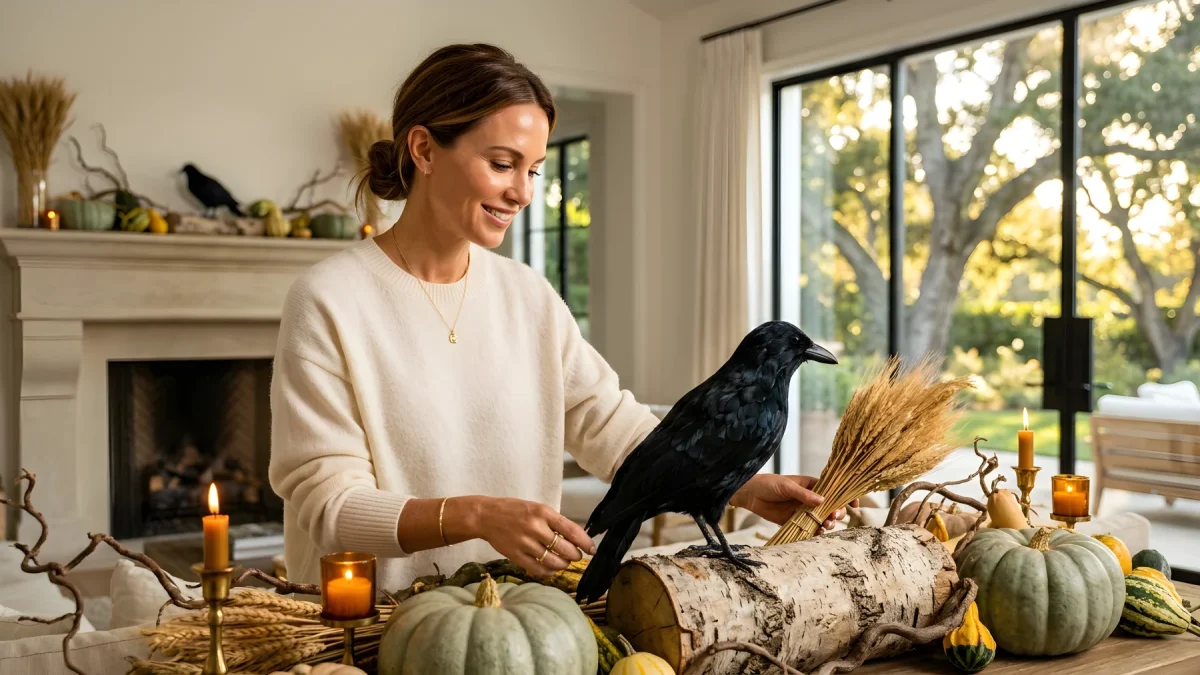
The secret to keeping a faux-crow display appropriate past October lies in shedding overt horror tropes while keeping natural textures intact. When isolated among cartoonish skeletons or fake cobwebs, a crow reads strictly as a Halloween gimmick. When grouped with warm woods, dried botanicals, and stoneware, the exact same bird becomes a sophisticated celebration of native wildlife.
In North American agricultural history, crows are synonymous with late-season cornfields and the final autumn harvest. Reintroducing those agricultural elements reframes the bird from a horror trope into an authentic symbol of the season.
Pairing high-contrast black silhouettes with warm, organic materials instantly softens harsh edges and establishes an authentic pastoral atmosphere rather than an artificial holiday theme.
The goal is not to hide the crows after late October, but to strip away the synthetic novelties that isolate them from the broader autumn landscape.
Step-by-Step Guide: Resetting the Vignette for November
Transitioning your mantel or tabletop requires a methodical removal of temporary holiday elements while layering in richer harvest textures:
- Clear high-contrast novelties: Remove plastic spiders, artificial webs, neon purples, and garish orange accents immediately once November begins.
- Shift the botanical base: Replace dyed black florals or bare plastic twigs with bundles of dried wheat, oat grass, seeded eucalyptus, and natural grapevine.
- Adjust the produce palette: Swap out carved jack-o’-lanterns for uncarved heirloom squash, muted green fairytale pumpkins, and white gourds that hold up through late November.
- Introduce warm metals: Place brass or antique bronze candleholders nearby. The warm reflection of real or LED candlelight against dark feathers creates depth without cold gothic shadows.
- Ground the display with raw wood: Mount your faux birds on weathered birch rounds, driftwood, or antique cutting boards to anchor the rural outdoor aesthetic.
Material Matters: Choosing Realistic Display Components
Not every artificial bird provides the realism required for an elevated November setting. Inexpensive hollow plastic models often appear garish under direct dining or living room lighting, whereas models finished with treated goose or chicken feathers absorb light naturally.
| Display Element | Best Practice for November Transition |
|---|---|
| Feather Quality | Select real-feathered forms over smooth plastic to mimic natural light absorption. |
| Pose Variety | Mix perched and feeding postures to avoid an unnatural, static museum look. |
| Supporting Produce | Pair with durable, long-lasting heirloom squashes rather than carved pumpkins. |
| Textural Backdrop | Incorporate woven baskets, linen runners, and natural burlap bases. |
| Lighting Tone | Utilize warm amber illumination (2700K) to highlight rich feather sheens. |
Myth vs. Reality: Seasonal Decor Rules
A widespread misconception suggests that deep black accents have no place in late fall or Thanksgiving decorating. Traditional retail displays frequently push an exclusively brown, red, and orange palette for November tablescapes, convincing homeowners that darker tones belong solely to October fright nights.
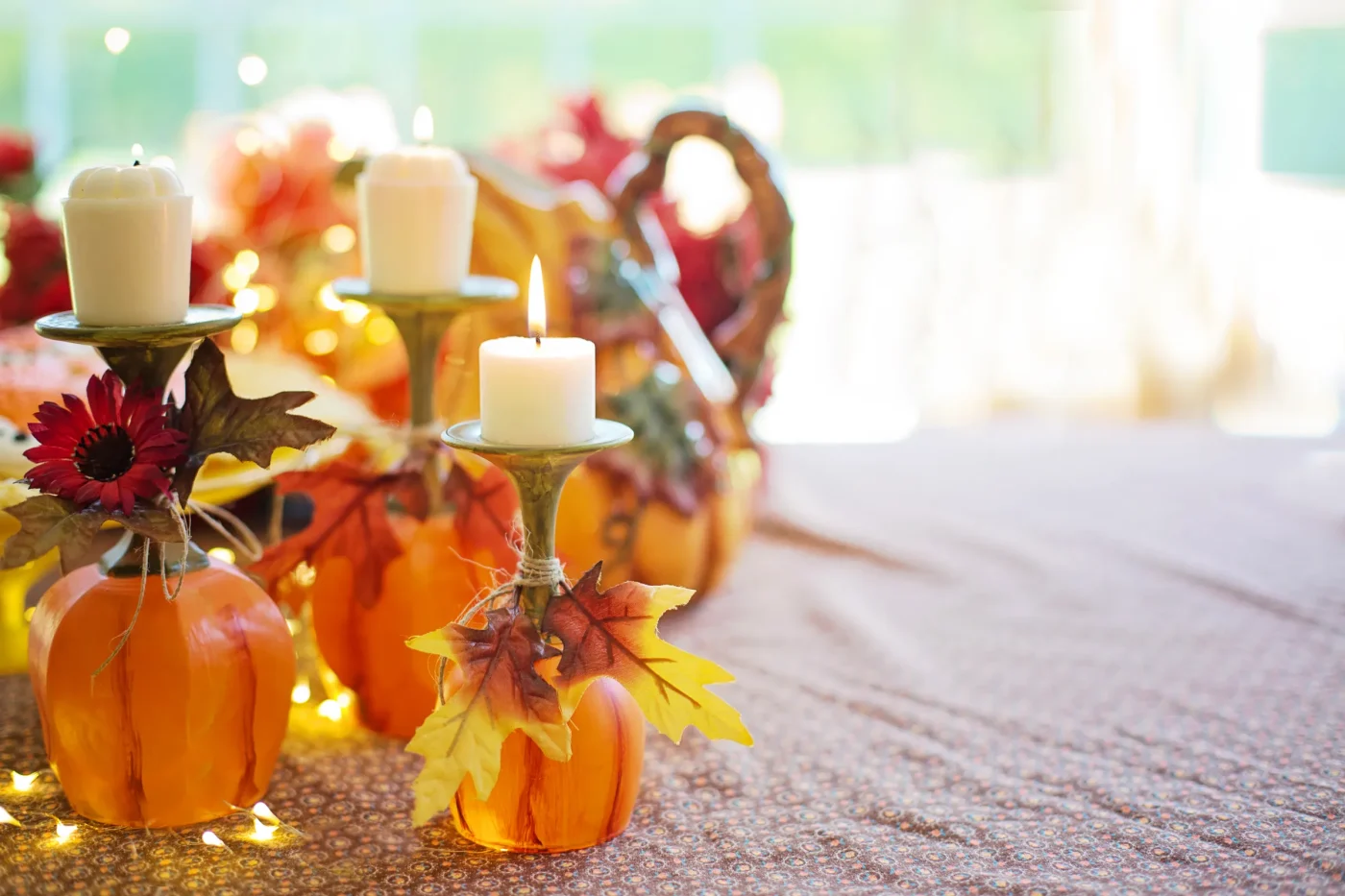
In interior design reality, black serves as an essential grounding neutral. Just as matte black hardware anchors modern farmhouse kitchens, a black sculptural accent provides visual weight that prevents warm oranges and browns from looking oversaturated. A tasteful faux-crow display introduces structural contrast that actually enhances the richness of amber glassware and natural timber.
By treating the bird as a timeless silhouette of North American fauna rather than disposable party gear, you extend your seasonal styling budget and maintain a cohesive, inviting home throughout the entire harvest window.
💡 Evaluate your current autumn accents and identify which pieces can remain through November simply by changing their surrounding textures.
🔍 Look for subtle ways to integrate natural harvest produce like long-lasting heirloom gourds to maintain a fresh, grounded look.
👇 Share your favorite dual-season styling strategies and join the conversation in the comments below.