
How Chicken Wire Ghosts Turn Ordinary Garden Mesh Into Eerie Halloween Figures

 Halloween Decor
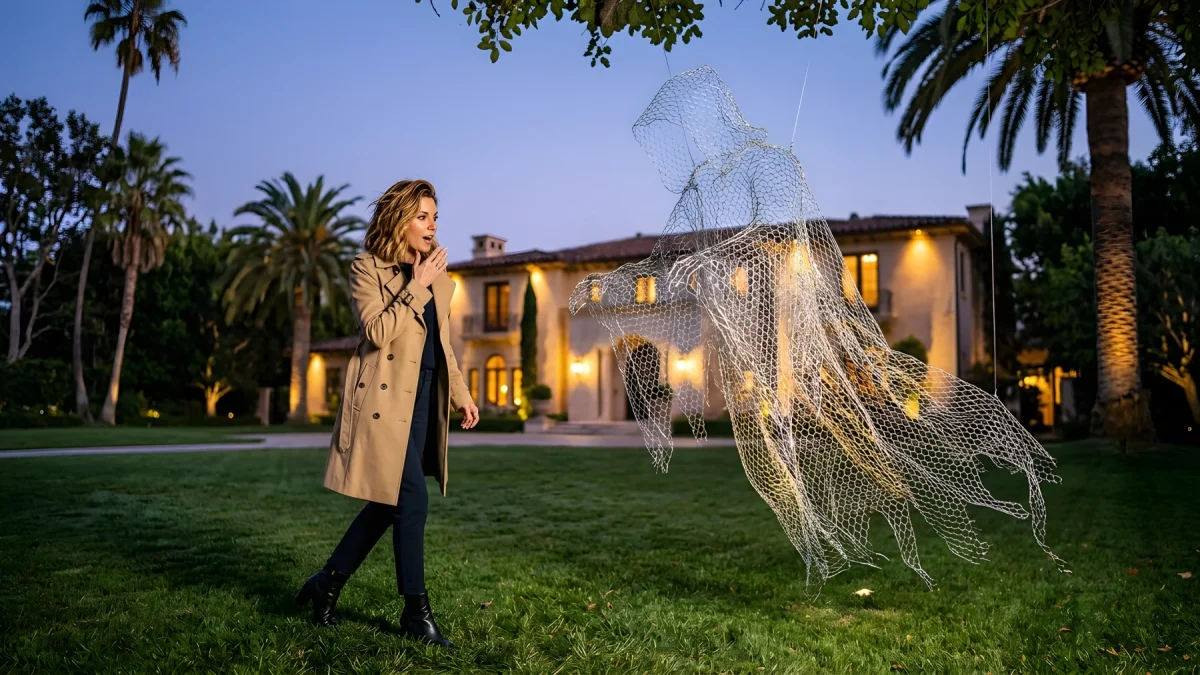
Shaped garden mesh creates an uncanny, semi-transparent silhouette that catches ambient light at night.
Chicken wire ghosts create an unnerving optical illusion in outdoor spaces by transforming standard metallic mesh into hollow, freestanding silhouettes that seem to vanish and reappear as lighting shifts. Using lightweight poultry fencing, sculptors and seasonal decorators shape translucent, lifesize figures that withstand rain, wind, and autumn temperatures without collapsing or blowing away.
Unlike inflated yard figures or flat fabric cutouts, sculpted wire structures possess dimensional depth while remaining virtually transparent in broad daylight. At twilight, the thin galvanized strands catch direct and ambient illumination, creating a floating apparition effect that appears entirely weightless on open lawns.
The Physics Behind the Wire Ghost Illusion
The visual impact of these figures relies on negative space and light refraction. Hexagonal poultry mesh consists of thin, galvanized steel woven in a repeating pattern that allows the surrounding landscape to show through completely. When light sources—such as streetlamps, uplights, or moonbeams—strike the reflective metallic coating, the outer contours reflect brightness while the hollow interior remains dark.
This contrast tricks the human eye into perceiving a solid, semi-transparent human form. Because the structure is hollow, it responds dynamically to changes in background movement, such as rustling autumn leaves or passing car headlights.
A common mistake in practice is over-tightening wire joints, which crushes the hollow volume and destroys the three-dimensional optical transparency necessary for a convincing phantom look.
To heighten this effect, builders frequently coat the sculpted metal with white primer, glow-in-the-dark paint, or ultra-fine cheesecloth. Even left bare, clean galvanized steel offers enough reflectivity to turn dark backyards into atmospheric seasonal displays.
Key Materials and Structural Properties
Selecting the correct gauge of garden mesh dictates how easily a figure takes shape and how long it stands without internal armatures. Thinner gauges flex rapidly around curves but may bow in high winds, while heavier gauges require more mechanical force to crimp.
| Material Feature | Practical Application |
|---|---|
| Mesh Gauge (20 to 22 gauge) | Offers ideal flexibility for hand-shaping facial features, torsos, and flowing drapery. |
| Galvanized Finish | Resists autumn moisture and rust, preventing degradation during weeks of outdoor exposure. |
| Hexagonal Spacing (1-inch) | Provides high tensile strength while maintaining transparency from moderate distances. |
| Ground Stakes / Anchors | Pins the lightweight hollow skirt directly into turf to secure the figure against wind. |
Essential Safety and Shaping Equipment
Working with cut wire requires specific physical safeguards to prevent lacerations. Because unrolled wire coils retain tension, cut ends snap back with sharp points capable of puncturing heavy fabric.
- Heavy leather work gloves: Protect palms and wrists against raw wire edges during crimping and bending.
- Needle-nose pliers: Provide the leverage needed to twist overlapping seams together tightly.
- Wire cutters or tin snips: Cleanly sever individual hex joints without deforming the adjacent weave.
- Full-body dress form or mannequin: Serves as an underlying mold to speed up anatomical shaping for shoulders and torsos.
Step-by-Step Construction Guide
Building a freestanding ghost involves fabricating distinct structural sections—typically the head, upper torso, and flowing skirt—and joining them together with continuous mechanical seams.
- Form the Head and Neck: Press a small square of fine-mesh wire over a foam armature or mannequin head, smoothing the crown and pinching inward beneath the jawline to secure facial contours.
- Shape the Torso and Arms: Wrap a longer length of wire around an upper-body form, crimping the metal along the spine and shaping extended, gesture-driven arms that taper into loose cuffs.
- Create the Sweeping Skirt: Form an inverted cone with wide rolls of netting, flaring the bottom outward to create a broad base that provides both aesthetic flow and physical balance.
- Lace the Components Together: Join the head, torso, and base by weaving discarded wire clippings through overlapping hex patterns, tightening them with needle-nose pliers.
- Anchor and Illuminate: Secure the hollow bottom perimeter to lawn turf using metal landscape staples, then position low-wattage exterior uplights behind or below the figure to cast sharp shadows.
Dispelling the Durability Myth
A widespread misconception suggests that lightweight wire figures inevitably warp or topple during damp autumn weather. In reality, aerodynamic drag on open hexagonal wire is negligible compared to solid canvas or vinyl decorations. Wind currents pass cleanly through the perforated surface rather than exerting lateral pressure against it.
When anchored at multiple points along the base perimeter with standard landscape pins, a hollow metal sculpture easily endures seasonal storms. The absence of fabric minimizes water retention, eliminating mold buildup and mid-season sagging entirely.
Lighting Techniques for Maximum Spectral Effect
Illumination dictates whether a wire figure looks like scrap fencing or a hovering specter. Direct, front-facing floodlights tend to wash out the mesh, exposing the individual wire strands and destroying the illusion of transparency.
Positioning a warm white or cool blue LED spotlight directly beneath the sculpture—or concealing an uplight within the base—causes the metal strands to catch the light from the inside out. This makes the figure appear self-luminous against the dark garden background.
💡 Have you ever tried sculpting seasonal decor out of utility garden materials?
🔍 Subtle uplighting and strategic lawn placement make all the difference when creating convincing atmospheric displays.
📌 Share your favorite outdoor crafting methods and tips in the comments below!