
How to Rig Skeleton Witches to Look Like They Are Flying on Brooms

 Halloween Decor
Proper suspension points and counterweights create a convincing midair illusion for outdoor Halloween displays.
Suspension rigging and precise weight distribution allow decorators to make full-sized **skeleton witches flying** on brooms appear completely weightless across an outdoor yard. Achieving a believable midair flight effect requires balancing the skeleton’s center of gravity along a rigid broomstick while securing concealed attachment points that resist heavy autumn wind gusts.
The visual secret relies on eliminating ground contact while preventing the figure from spinning uncontrollably or tipping headfirst toward the lawn. By utilizing high-tensile braided line, internal armature stiffeners, and calculated anchor geometry, home decorators can turn budget plastic prop skeletons into dynamic, airborne yard centerpieces.
The Physics of Midair Prop Suspension
Standard plastic yard skeletons lack rigid internal structure, meaning an unsupported skeleton draped across a broomstick quickly slumps forward into an awkward dangle. Creating an authentic aerodynamic posture requires mechanical reinforcement along the spine, hips, and limbs before lifting the display into the air.
The prop must hold a forward-leaning flight pose where the knees bend upward toward the broom handle and the hands grip the shaft firmly. Securing the pelvic bone directly to the broom handle serves as the central pivot point for the entire assembly.
A common mistake in yard rigging is attempting to hang the broom and the figure separately, which causes their movements to fall out of sync in the wind.
When the witch and broom operate as a single locked unit, the assembly tilts naturally into crosswinds rather than tangling into itself. Achieving this mechanical lock requires a deliberate approach to hardware selection and weight management.
Essential Rigging Gear and Load Ratings
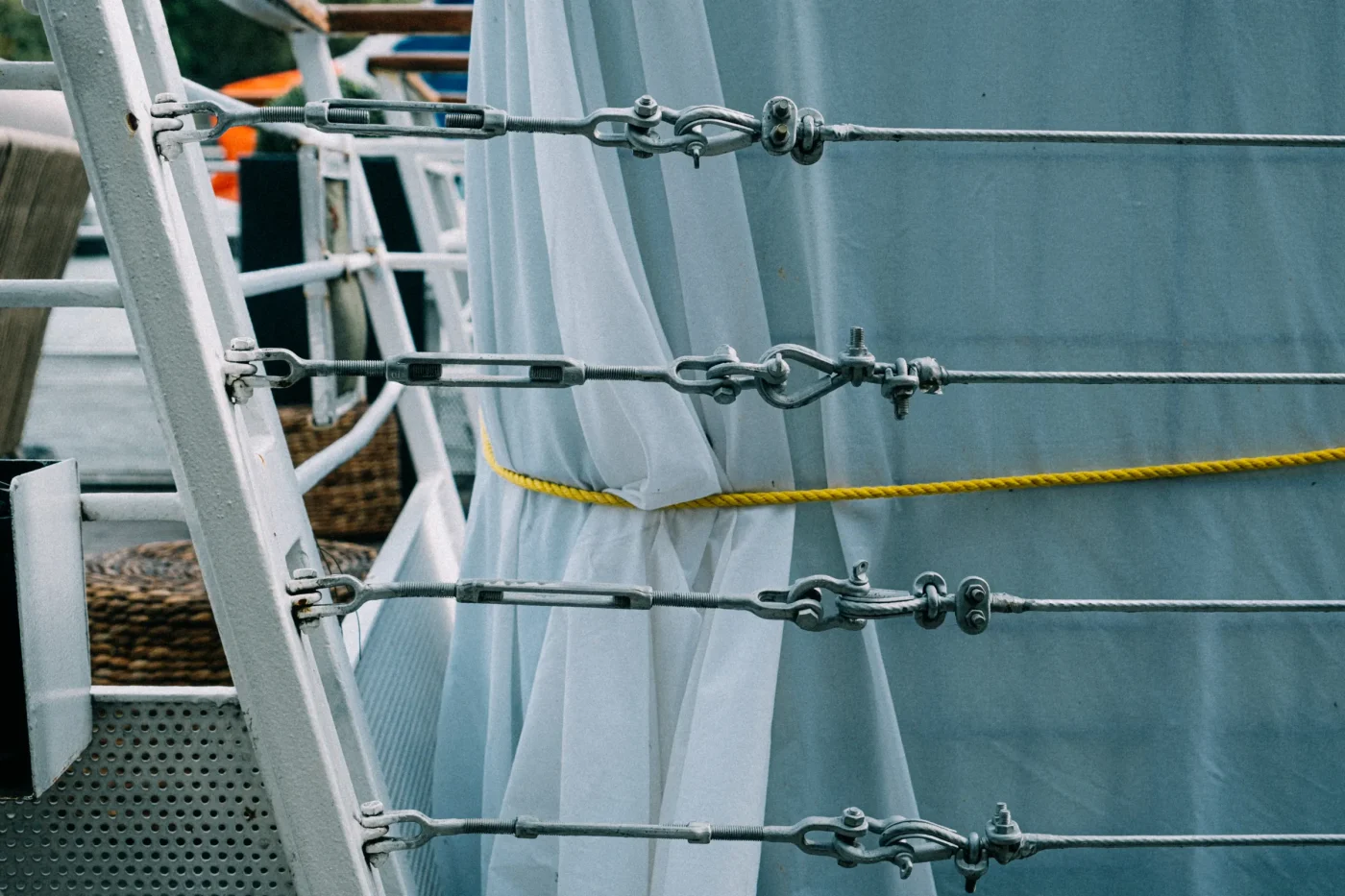
Choosing the right materials ensures the airborne skeleton remains stable throughout October rain and wind without snapping line or dropping onto walkways.
| Rigging Component | Recommended Specification |
|---|---|
| Suspension Line | 100 lb to 200 lb test braided fishing line or thin aircraft cable |
| Broom Core | 1-inch structural hardwood dowel or lightweight conduit pipe |
| Internal Armature | Heavy-gauge copper wire, rebar, or heavy-duty zip ties |
| Hardware Anchors | Stainless steel turnbuckles and screw-eye hooks |
| Costume Fabric | Lightweight weather-resistant chiffon or ripstop fabric |
Decorative store-bought brooms typically feature hollow, brittle straw and weak handles that snap under the torque of an anchored 15-pound skeleton prop. Upgrading the broom shaft with a rigid inner core ensures the prop remains secure under dynamic wind pressure.
Step-by-Step Guide to Assembling the Flight Rig
Building a reliable aerial display demands a sequence that locks the figure’s joints before raising it toward trees, porch beams, or structural eaves.
- Reinforce the Broom: Insert a 1-inch wooden dowel or rigid metal conduit through the broom head and along the handle to prevent flexing under tension.
- Pose and Lock the Skeleton: Thread heavy-gauge wire through the spine and zip-tie the hip assembly firmly against the broom shaft just forward of the bristles.
- Secure Hand and Foot Holds: Drill small pilot holes through the broom handle to run black cable ties through the wrists and ankles, locking the limbs into a gripping tuck.
- Dress with Flowing Fabrics: Drape torn, lightweight black fabric over the shoulders and torso to catch ambient drafts, masking mechanical anchor ties while enhancing the illusion of forward speed.
- Install Dual-Point Suspension: Attach primary load-bearing lines to two separate points along the broom shaft rather than a single center mount to stop uncontrollable spinning.
Using two distinct anchor lines above the prop prevents the broom from revolving like a wind chime whenever a breeze passes through the trees.
Fine-Tuning the Flight Angle
A horizontal broom looks static and lifeless to passing onlookers. Tilting the front handle slightly upward while trailing the broom bristles lower creates an active climbing trajectory that mimics real cinematic flight.
Adjusting the forward suspension line slightly shorter than the rear line locks in an aggressive, dynamic angle of attack against the horizon.
Common Rigging Misconceptions
Many hobbyists assume standard monofilament fishing line provides the most invisible and secure suspension method for yard props. Clear monofilament stretches significantly under sustained loads and rapidly degrades when exposed to direct ultraviolet sunlight, eventually causing heavy drops.
Braided lines or micro-diameter black aircraft cables offer superior tensile resistance without elastic sagging. Against dark evening skies and autumn foliage, thin black cordage virtually disappears to the naked eye while maintaining immense structural security.
💡 Safety first: Never suspend heavy decorations directly over active walkways, sidewalks, or public driveways where strong wind gusts could create falling hazards.
🔍 Pro lighting trick: Aim low-voltage purple or green uplights at the fluttering witch fabric while leaving the rigging lines in total shadow to maximize the flying illusion.
📌 Plan ahead: Test your suspension tension during daylight hours to ensure the broom clears nearby branches before darkness sets in.
👇 Share your experiences with us in the comments below and let fellow decorators know how you anchor your aerial yard displays against unpredictable autumn weather!