
How to Master the Iconic Broadway Green: The Ultimate Elphaba Theatrical Makeup Guide

 Costumes & Makeup
How to Master the Iconic Broadway Green: The Ultimate Elphaba Theatrical Makeup Guide
Transforming into the iconic Wicked Witch of the West demands far more than spreading green paint across bare skin; it requires a specialized, multi-phase application engineered to deliver rich chroma, structural dimension, and sweat-resistant longevity under searing stage lights. Achieving this signature theatrical complexion hinges on balancing high-grade theatrical pigment with modern beauty contouring so the facial architecture remains sharp, defined, and expressive rather than flat or ghostly.
The visual impact of an Elphaba makeup tutorial relies on understanding how theatrical formulations behave compared to standard daily cosmetics. Water-activated paints, cream bases, and heavy setting powders each interact differently with natural body heat, meaning a single misstep during base preparation can result in patchy coverage, cracking, or rapid midday breakdown.
Theatrical Pigment Science: Water-Activated Cakes vs. Cream Sticks

Stage artists and content creators replicating the Broadway aesthetic primarily choose between two primary mediums: glycerin-based water-activated makeup and high-pigment cream sticks. Water-activated cakes provide an exceptionally lightweight, matte finish that feels weightless on the skin, yet they remain vulnerable to perspiration and humidity. Conversely, oil- and wax-based theatrical creams offer superior blending capability, allowing the artist to sculpt high-contrast highlights and shadows directly into the wet base before locking it down.
Understanding which formulation aligns with your skin type and performance environment prevents early texture breakdown. The table below outlines how these two primary mediums compare when engineering full-face chromatic coverage.
| Formulation Type | Core Performance Attributes |
|---|---|
| Water-Activated Cakes | Smudge-resistant once dry; dries fully matte; requires minimal setting powder; sensitive to sweat. |
| Cream-Based Sticks | Highly blendable; allows cream contouring; requires heavy translucent setting powder to lock. |
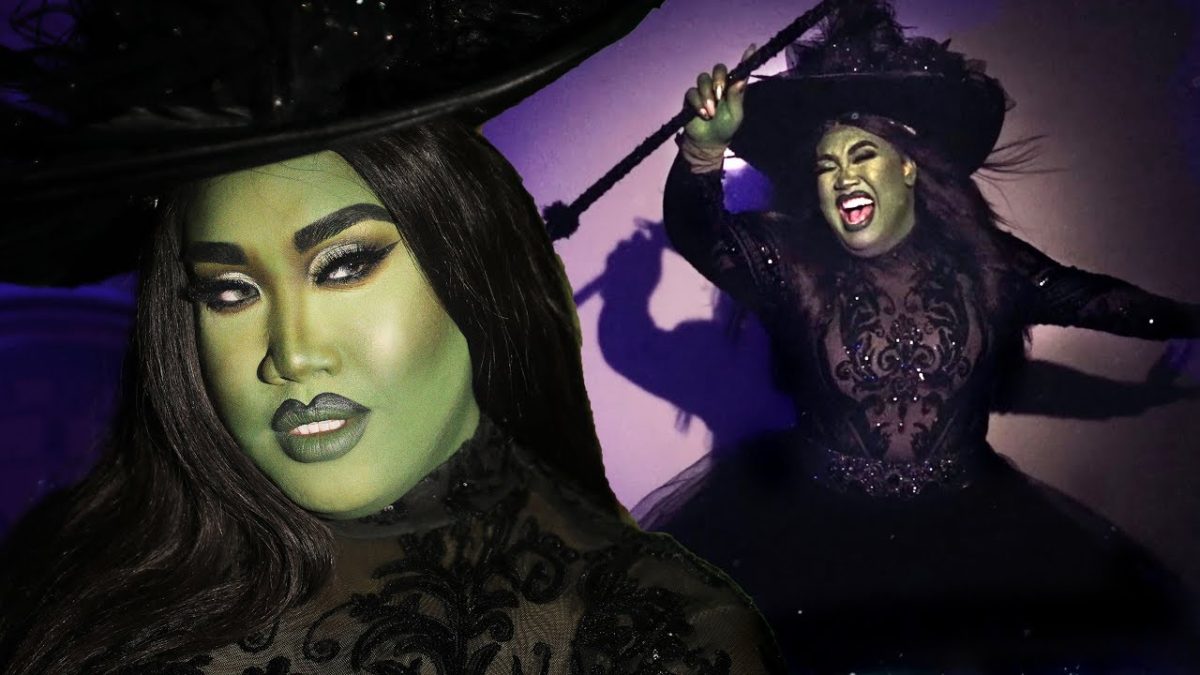
When selecting a base, professional artists frequently balance color temperature. The classic Broadway green is rarely a singular primary shade; it combines undertones of yellow-olive and deep forest green to avoid an unnatural, cartoonish neon glow. The accompanying beauty tutorial showcases how these classical stage principles translate directly into high-definition digital artistry.
Achieving high-density chromatic coverage without blotchiness requires pressing pigments into the skin with high-density synthetic sponges rather than dragging brushes across delicate pore textures.
Step-by-Step Application: Engineering the Defying Gravity Look
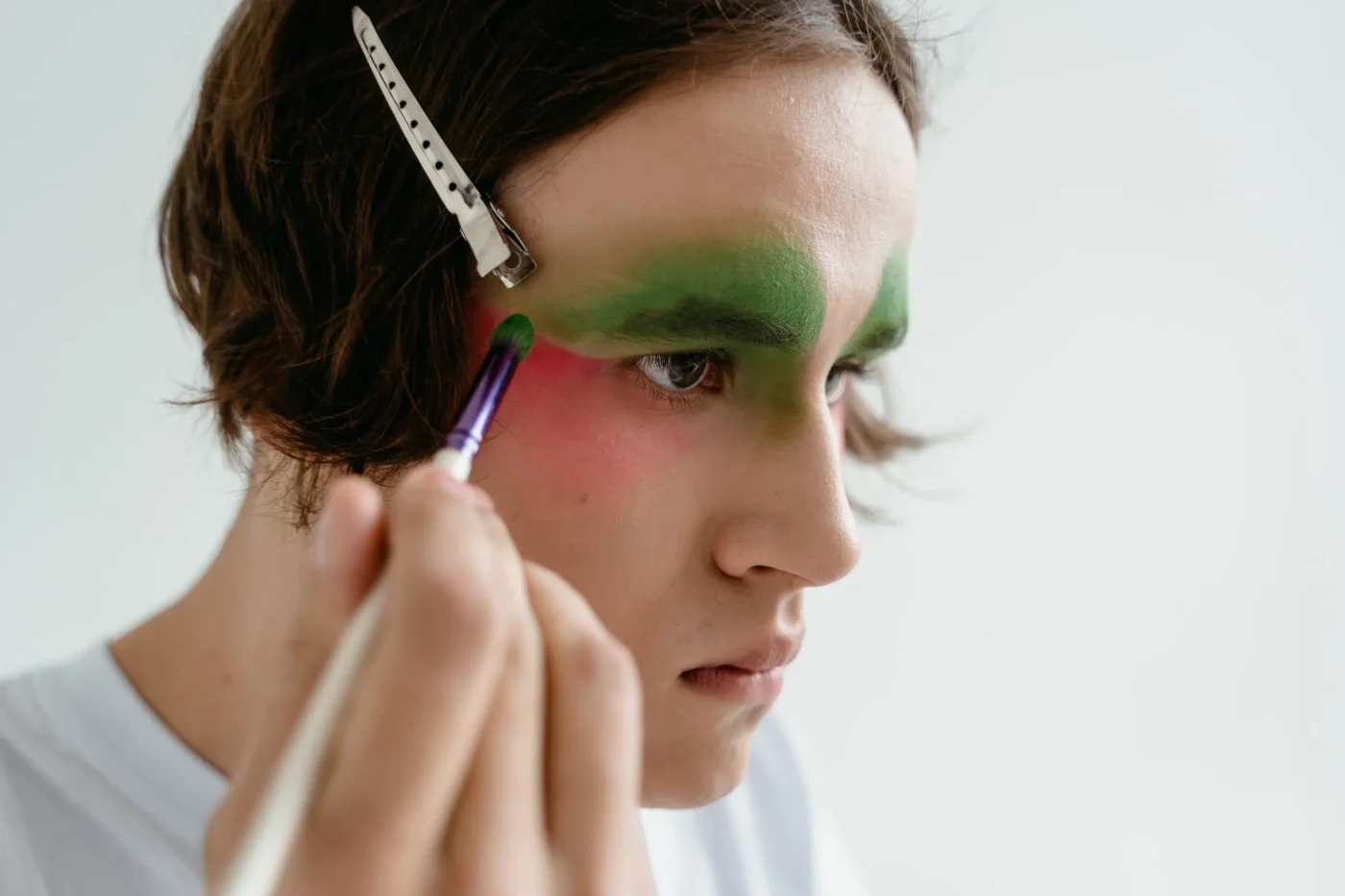
Executing an authentic theatrical transformation demands careful preparation and methodical layering to guarantee skin integrity and color saturation.
- Skin Preparation and Barrier Protection: Cleanse the face thoroughly to remove residual surface oils, then apply an oil-free barrier primer to shield pores from intense chromatic dyes.
- Eyebrow Neutralization: Flatten natural brow hairs using cosmetic adhesive or an eyebrow sealing wax, setting the area with translucent powder to allow a higher, more arched theatrical brow to be drawn later.
- Uniform Green Base Laydown: Work in thin, buildable sections, pressing the chosen green base evenly across the forehead, cheeks, neck, and ears using a damp sponge.
- Chiseled Contouring: Sculpt the hollows of the cheekbones, temples, and jawline using an ultra-deep hunter green or matte black pigment to build dramatic stage depth.
- Strategic Highlighting: Bring forward the high points of the face, including the bridge of the nose and the tops of the cheekbones, using a vibrant chartreuse or lime-tinted accent color.
- Baking and Fixation: Dust a micro-milled neutral or tinted setting powder generously over the face, allowing it to sit before brushing away the excess to prevent pigment transfer.
- Dramatic Eye and Lip Accents: Frame the eyes with jet-black liquid liner, deep plum or smoky charcoal shadow, and dense false lashes, finishing the mouth with a deep berry or blackened plum lipstick.
Busting the Single-Tone Green Myth
A widespread misconception is that an authentic Elphaba transformation requires only a single pot of bright green face paint. In reality, applying an unshaded green across the entire face flattens natural bone structure, making facial expressions invisible under direct illumination. Professional stage transformations always rely on complementary shadow shades, such as deep emerald, aubergine, and charcoal, to restore bone definition and dramatic expression.
Similarly, relying solely on setting spray without setting powder is a frequent error. Liquids cannot properly bond theatrical waxes without a structural dusting of silica or talc-based powders to absorb residual surface moisture and create a friction-resistant seal.
💡 Prep is everything: Never skip a protective barrier primer, especially when working with concentrated pigments that risk temporarily staining dry skin zones.
🔍 Build, do not smear: Work in thin layers to ensure your green base bonds securely without cracking during active facial movement.
📌 Lock it down: Always seal wax-based creams with ample translucent setting powder before introducing dry shadow accents.
👇 Share your experiences with us: Have you tried your hand at theatrical character transformations? Leave your thoughts in the comments below and tell us your favorite stage beauty techniques!