
How to Recreate the Viral Strawberry Dress With a Dark Halloween Twist

 Costumes & Makeup
Dark tulle and vintage dressmaking techniques give the internet-famous strawberry silhouette a dramatic Halloween overhaul.
The viral pastel pink strawberry dress, originally created by designer Lirika Matoshi, can be transformed into a dramatic, gothic centerpiece for autumn by swapping light organza for layered black tulle and deep crimson accents. Recreating this silhouette requires combining high-volume gathering techniques with structured 1950s bodice tailoring. Makers pursuing this dark redesign must manage up to 15 yards of sheer fabric to achieve the correct skirt drape without warping the seams.
When the original design took social media by storm, its signature aesthetic relied on soft, cottagecore romance: iridescent pink netting, puffy sleeves, and sequined fruit. Inverting that visual language into a Halloween strawberry dress turns a whimsical summer garment into theatrical gothic couture. The transition demands specific sewing adjustments to preserve the structural lightness while handling darker, often stiffer dyed fabrics.
Popular sewist Rachel Maksy brought this specific spooky adaptation into maker culture using vintage pattern manipulation, proving that heritage tailoring methods provide the exact support required for dramatic sheer overlays.
Choosing the Right Retro Pattern Foundation
The original designer gown uses a distinct mid-century silhouette: an empire-adjacent waistline, a deep plunging neckline, a full gathered skirt, and puffed sleeves. Modern fast-fashion patterns often cut corners on inner support, which causes heavy gathered skirts to drag the bodice downward.
Vintage patterns, specifically 1950s tea-length foundations such as Butterick 6551, offer the internal geometry needed for this garment. These classic patterns include targeted waist stays and bust darting that anchor multiple gathered tiers securely to the torso.
Adapting Bodice and Sleeve Architecture
To prepare a retro pattern for sheer novelty fabrics, the bodice pieces must be cut twice: once in an opaque base lining and once in an outer sheer overlay. Cotton sateen or lightweight dupioni provides the structural grip needed to support decorative tulle without stretching under tension.
The sleeves require significant volume amplification to achieve the iconic bubble effect. Adding two to three inches of slash-and-spread fullness to the sleeve head creates dramatic shoulder gather, which can be secured at the cuffs with soft lingerie elastic.
Tulle Dynamics: Fabric Selection and Embellishment

Working with dark novelty mesh introduces distinct finishing hurdles compared to standard garment fabrics. Black and burgundy bridal illusion tulles offer the softest hand feel, but polyester craft netting provides superior structural lift for layered petticoats.
Gathering fine netting demands lower thread tension and a dedicated basting run; pulling gathering threads unevenly on stiff synthetic tulle will snap standard polyester core-spun thread immediately.
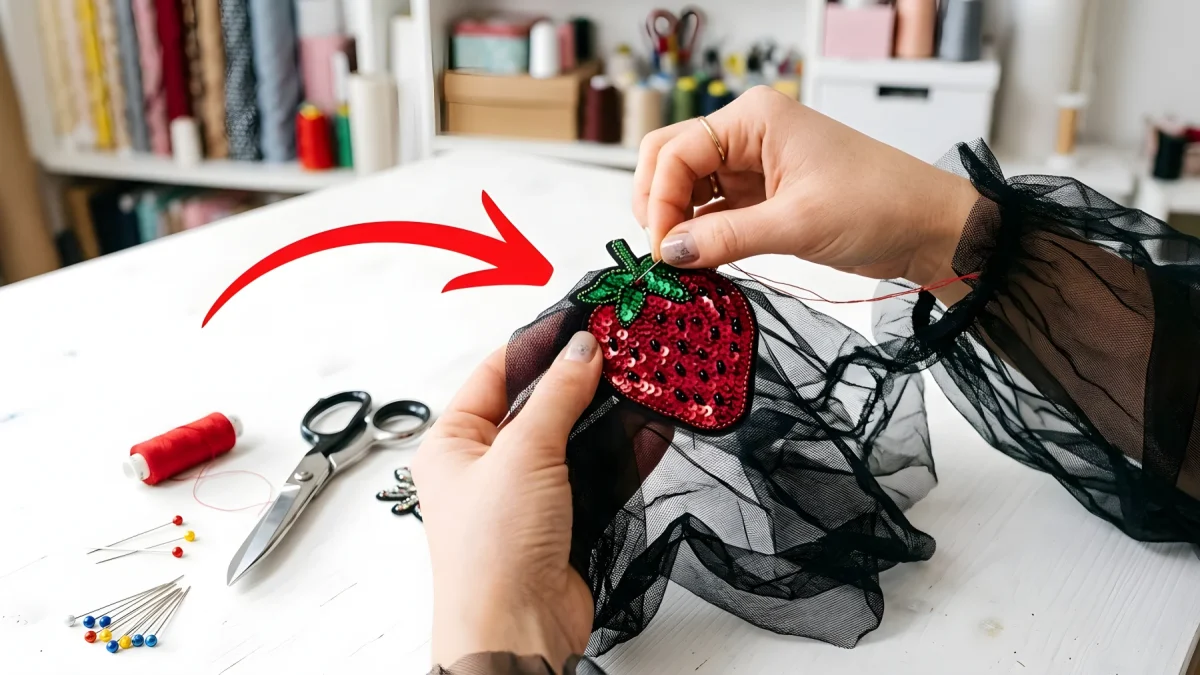
Attaching decorative strawberries presents a choice between sequined iron-on patches, fabric paint stenciling, or hand-sewn motifs. Because synthetic netting melts easily under direct heat, iron-on embellishments require a pressing cloth and low iron temperatures, or cold-set fabric adhesive.
| Design Element | Halloween Adaptation |
|---|---|
| Base Fabric | Midnight black or slate bridal tulle over dark lining |
| Embellishment Style | Deep red, metallic, or blood-drop strawberry appliqués |
| Sleeve Silhouette | High-volume puffed sleeves with elasticized cuffs |
| Hem Construction | Triple-tier ruffled border with horsehair braid reinforcement |
Step-by-Step Construction Guide
Assembling a high-volume sheer garment demands methodical preparation to prevent slipping and puckering at every seam line.
- Stabilize and sew the bodice: Underline your dark base fabric with lightweight interfacing, stitch bust darts, and join the side seams to create a rigid foundation.
- Mount the sheer overlay: Baste your black novelty netting directly to the structured bodice along the neckline and waistline before finishing edges with bias binding.
- Assemble the puffed sleeves: Run two parallel lines of basting stitches along the sleeve cap, gather tightly into the armscye, and finish internal seams with French seams to eliminate scratchy raw edges.
- Gather the skirt tiers: Divide your tulle yardage into equal quadrants, pin systematically to the waistline, and run dual gather threads to distribute fullness evenly around the hips.
- Secure hem ruffles and motifs: Gather a continuous five-inch strip of netting along the bottom edge, stitch it to the skirt perimeter, and apply dark berry motifs across the outer layer.
Debunking the Industrial Tool Myth

A widespread misconception among amateur costumers is that sewing floor-length tulle gowns requires industrial sergers and specialized high-speed machinery. Standard domestic machines easily handle fine netting when paired with a size 70/10 Microtex needle and a narrow zigzag stitch.
The real secret to high-end results lies in seam stabilization rather than machine power. Placing tissue paper strips directly under delicate tulle during stitching prevents the feed dogs from pulling the sheer weave down into the throat plate.
💡 Start with stable lining layers to ensure your gathered skirt retains its shape all evening.
🔍 Test your adhesive and heat settings on scrap netting before applying dark berry motifs to the final garment.
📌 Share your own gothic sewing projects and pattern modifications in the comments below!