
How to Master the Tomie Junji Ito Trippy Illusion Makeup for Halloween

 Costumes & Makeup
How to Master the Tomie Junji Ito Trippy Illusion Makeup for Halloween
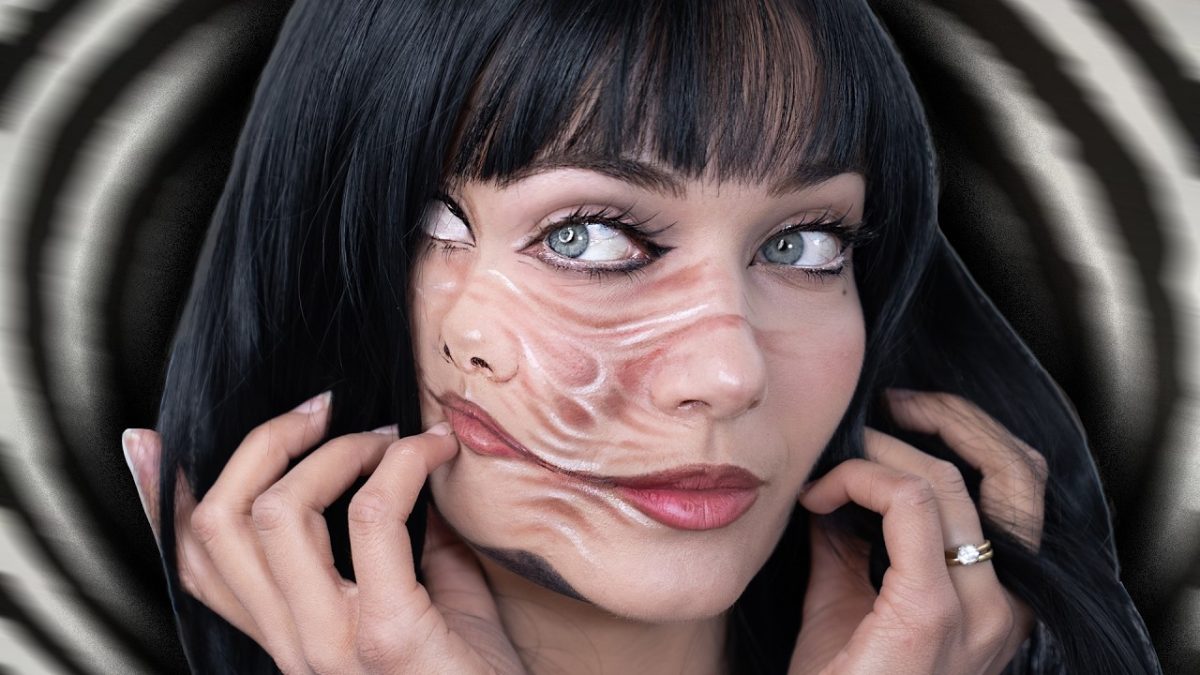
Mastering the Tomie Junji Ito trippy illusion makeup tutorial requires precise line placement, high-contrast monochrome shading, and balanced facial mapping to replicate the iconic multiplying horror aesthetic of the cult manga series. By juxtaposing a realistic human face against a painted duplicate emerging from the cheek or jawline, this visual technique transforms 2D Japanese comic book ink into a disorienting, three-dimensional Halloween masterpiece.
The character of Tomie Kawakami, introduced in Junji Ito’s debut 1987 manga, represents an immortal entity whose severed cells regenerate into identical, vengeful clones. Achieving this unsettling psychological effect on living skin hinges on precise depth manipulation rather than heavy prosthetic gore.
The Anatomy of an Optical Illusion Face
Creating an optical illusion on facial contours demands understanding how flat ink interacts with natural bone structure. When mapping out a secondary set of features, the painted eye, nose, and lip must align with the natural perspective of an observer standing directly in front of you.
Manga-inspired aesthetics rely on clean graphic novel conventions rather than standard cosmetic blending. Crisp pen-like outlines and stark contrast mimic the pen-and-ink crosshatching characteristic of horror manga, turning your face into a living comic book panel.
The secret to a convincing split-face optical illusion lies entirely in shadow placement; without deliberate faux shadows, the brain immediately registers the secondary face as flat paint rather than a separate living entity.
Essential Tools and Pigment Selection
Executing clean lines requires specialized tools that maintain sharpness over several hours of wear. Water-activated paints or highly pigmented cake liners yield far sharper graphic lines than traditional creamy cosmetic pencils, preventing the smudging that immediately breaks the illusion.
- Water-activated face paint in jet black and stark white for line work and highlighting.
- Ultra-precise liquid eyeliner pens with fine brush tips for hatching and lash details.
- Matte eyeshadow palettes featuring cool grays, deep blacks, and neutral contour tones.
- Setting spray and translucent powder to lock moisture-sensitive paints against facial oil.
Step-by-Step Tomie Double-Face Application Guide
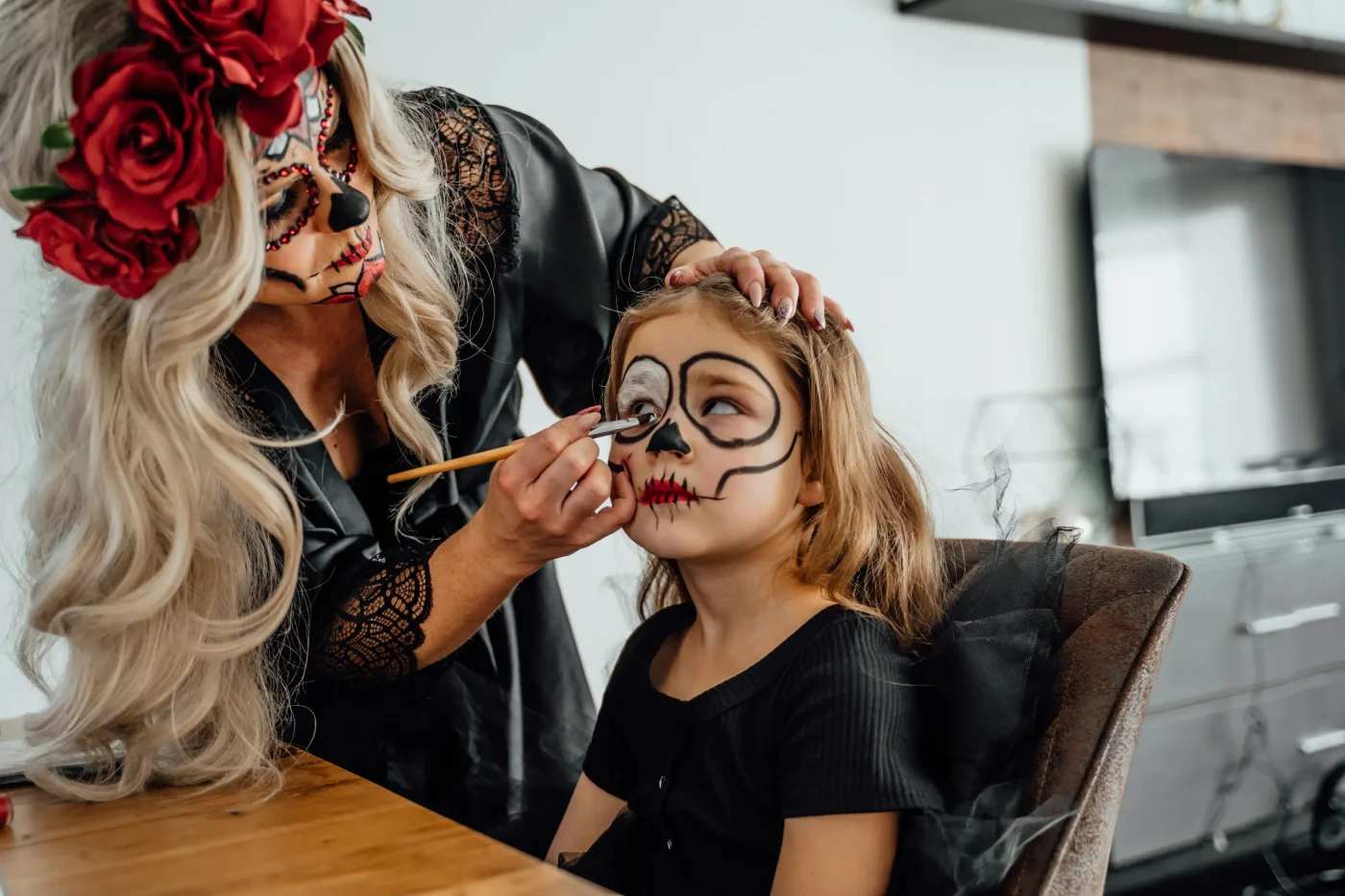
Patience during the initial sketch phase determines the success of the entire look. Rushing into bold black pigment before securing accurate proportions often results in misaligned features that fail to disorient the viewer.
- Prepare the Canvas: Apply a pale, neutral foundation across the entire face, neck, and ears to mimic the porcelain complexion typical of traditional manga heroines. Set lightly with translucent powder to eliminate shine.
- Map the Split Line: Using a light brown eyebrow pencil, sketch a jagged, organic dividing line running diagonally across the bridge of the nose down to the jaw, demarcating where the secondary face emerges.
- Draft the Secondary Features: Lightly outline the duplicated eye, half-brow, and parted mouth along the outer cheekbone. Keep the scale identical to your natural features to maximize visual confusion.
- Render Graphic Eyes and Beauty Marks: Paint stylized manga lashes and heavy black upper lids using an ultra-precise eyeliner. Place Tomie’s unmistakable trademark beauty mark directly below the left lower eyelid on both the natural and painted faces.
- Incorporate Manga Shading: Fill negative space along the dividing line with high-contrast black paint. Use fine, parallel hatch marks rather than soft gradients to emulate Junji Ito’s distinctive illustration method.
- Highlight for Dimensional Pop: Dot bright white face paint on the painted eyeball, brow bone, and simulated lip edge to simulate artificial light reflection.
Technical Breakdown: Manga Illusion vs. Standard Cosplay
Understanding where traditional character cosplay diverges from optical graphic art is critical for executing this design properly.
| Element | Design Requirement |
|---|---|
| Finish | Ultra-matte base with stark, unblended graphic ink strokes |
| Key Motif | Secondary emerging facial structure with duplicate beauty mark |
| Lash Style | Exaggerated 2D spikes painted along lower and upper rims |
| Color Palette | Monochrome grays, intense black, stark white, and muted lip tones |
Overcoming Common Illusion Flaws
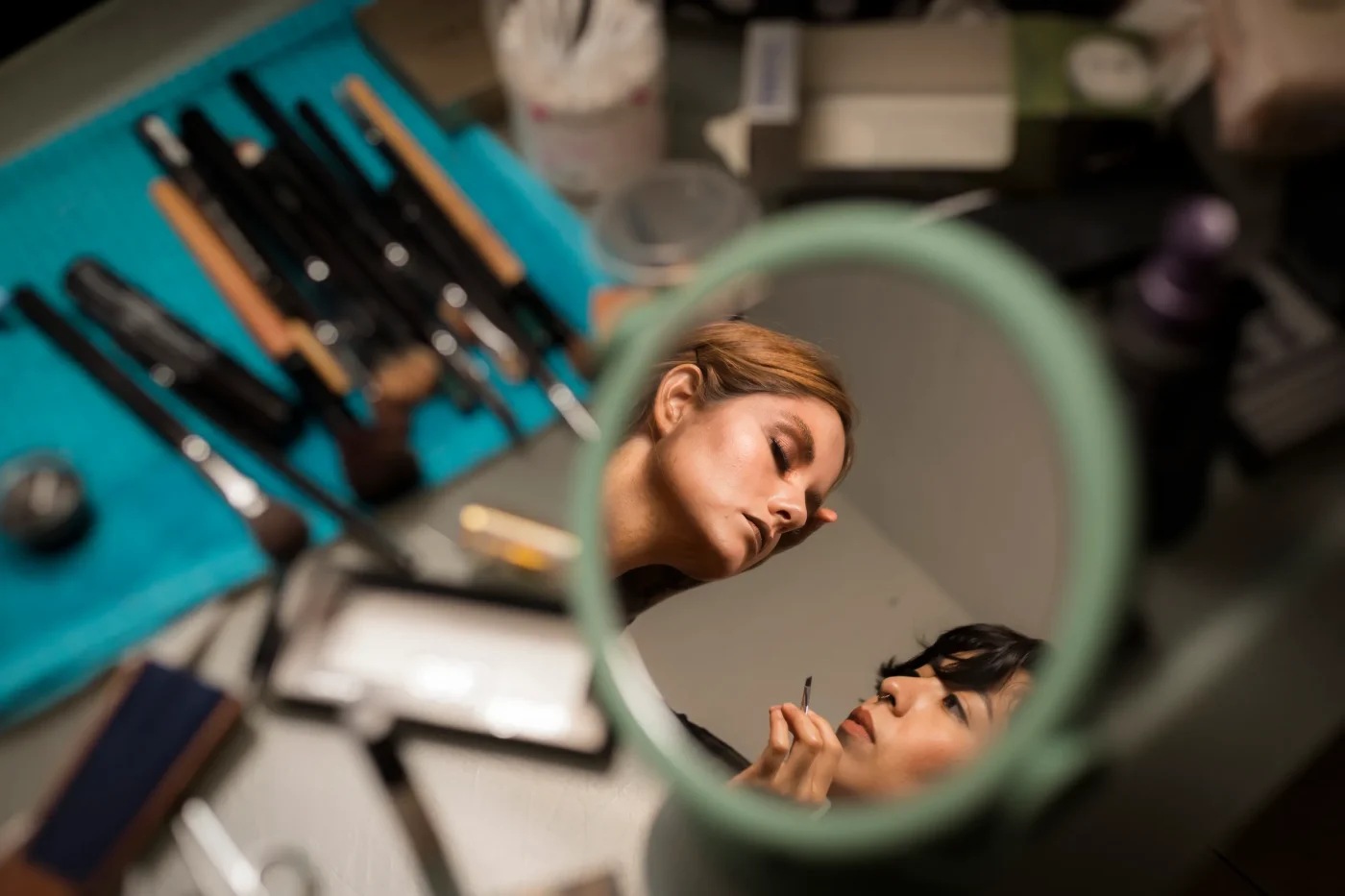
A widespread misconception is that optical makeup requires complex special effects latex or heavy silicone prosthetics. In reality, physical bulk often destroys the graphic flatness essential to the Junji Ito art style, as real-world studio lighting casts unwanted highlights on raised prosthetic edges.
Another frequent misstep is softening the line work with excessive blending brushes. Manga illustrations derive their tension from stark, decisive boundaries; replacing crisp pen strokes with smoky diffuse shading transforms the look into conventional gothic makeup instead of an authentic manga recreation.
💡 Ready to test your optical illusion skills this spooky season? Start by mapping your facial proportions lightly in pencil before committing to high-pigment ink.
🔍 Double-check your angles in front of a ring light to confirm the secondary face creates a compelling double take from across the room.
👇 Share your favorite Junji Ito horror transformations and let us know which manga classic you plan to recreate next!