
Inside the 210-Drone Halloween Light Show Synchronizing Lasers, Fire, and Projection Mapping

 Halloween Ideas & Trends
Inside the 210-Drone Halloween Light Show Synchronizing Lasers, Fire, and Projection Mapping
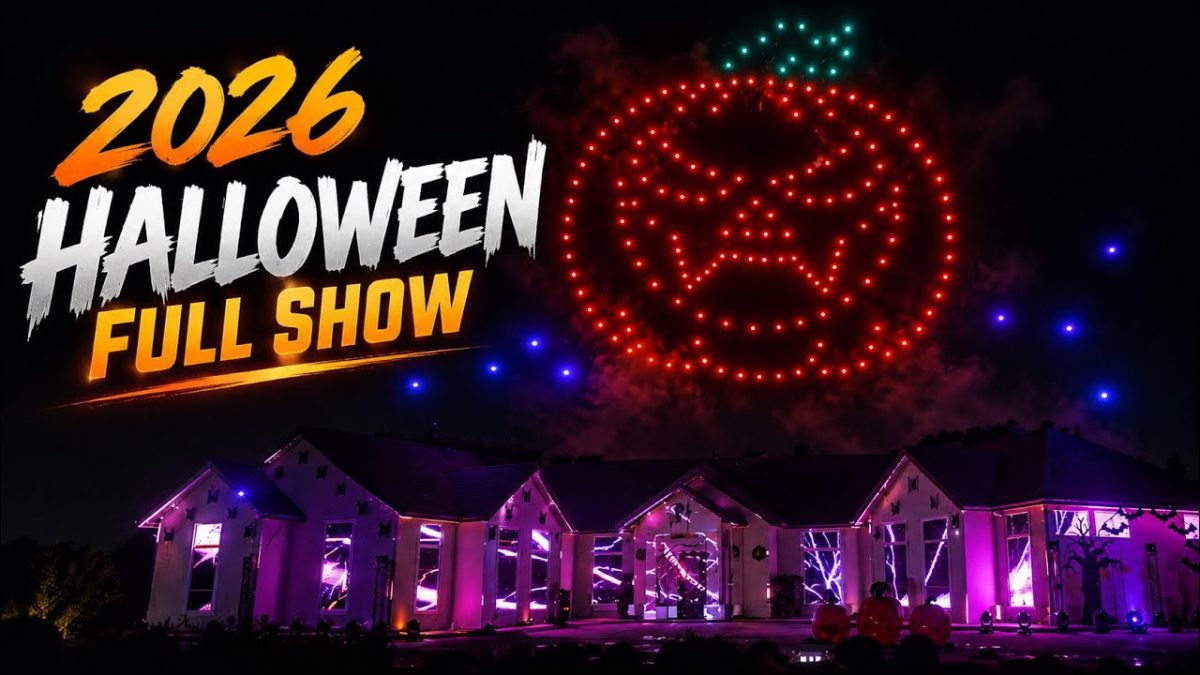
A state-of-the-art Halloween light show now commands an arsenal of 210 synchronized aerial drones, 12 industrial-grade 30-watt lasers, four 10,000-lumen projection systems, and thousands of individually programmable pixel lights operating in unified concert. Modern automated holiday productions have evolved far past static lawn decor, merging precision robotics, live flame projectors, cold sparks, and dynamic water fountain arrays into massive multimedia spectacles.
Behind this scale of visual engineering lies a complex framework of network protocols, sub-millisecond timeline synchronization, and strict aviation coordination. Executing an outdoor performance combining airborne swarms with ground-based pyrotechnics and optical projectors demands rigorous sequencing that turns suburban and commercial spaces into live digital canvases.
The Architecture of Modern Multi-Sensory Light Displays
Modern high-tier holiday productions rely on decentralized yet tightly locked control networks. Running hundreds of independent channels across distinct atmospheric mediums—light, water, and fire—requires lighting software to speak directly to industrial stage machinery and drone flight computers without perceptible latency.
Central control software operates primarily through timecode protocols such as SMPTE or Art-Net over gigabit Ethernet networks. Each individual fixture, whether a moving-head beam or an individual LED pixel node, receives DMX512 data packets that update dozens of times per second.
Modern show design requires total synchronization across aerial and terrestrial mediums; a five-millisecond drift between audio timecode and laser emission completely shatters the audience’s visual immersion.
Integrating high-output hardware demands specialized engineering considerations to ensure both optical visibility and physical safety across every medium:
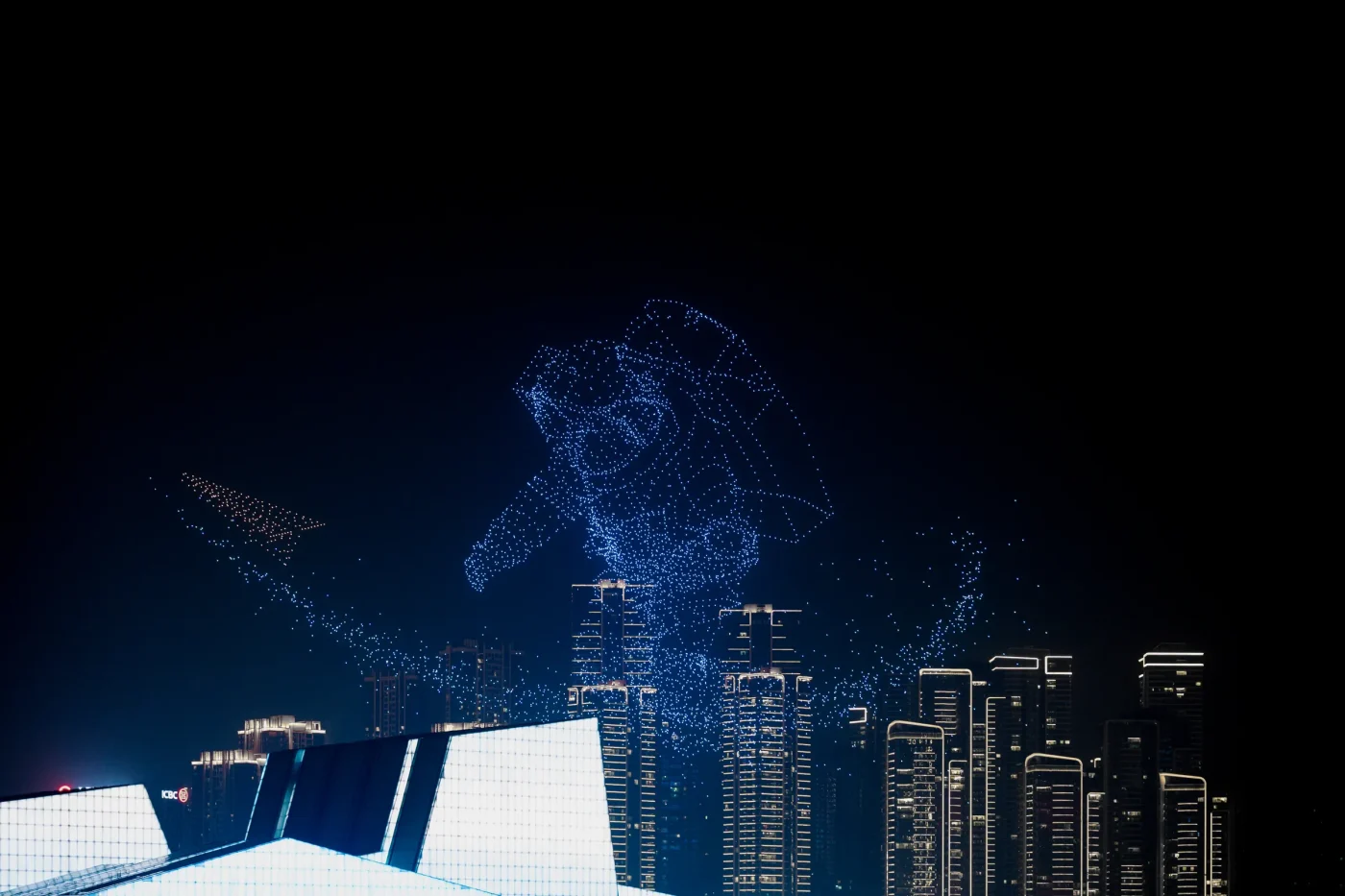
- Aerial Fleets: Fleets running 210 autonomous drones utilize localized GPS positioning and dedicated radio frequency bands to generate volumetric shapes, moving skeletons, and seasonal iconography in open airspace.
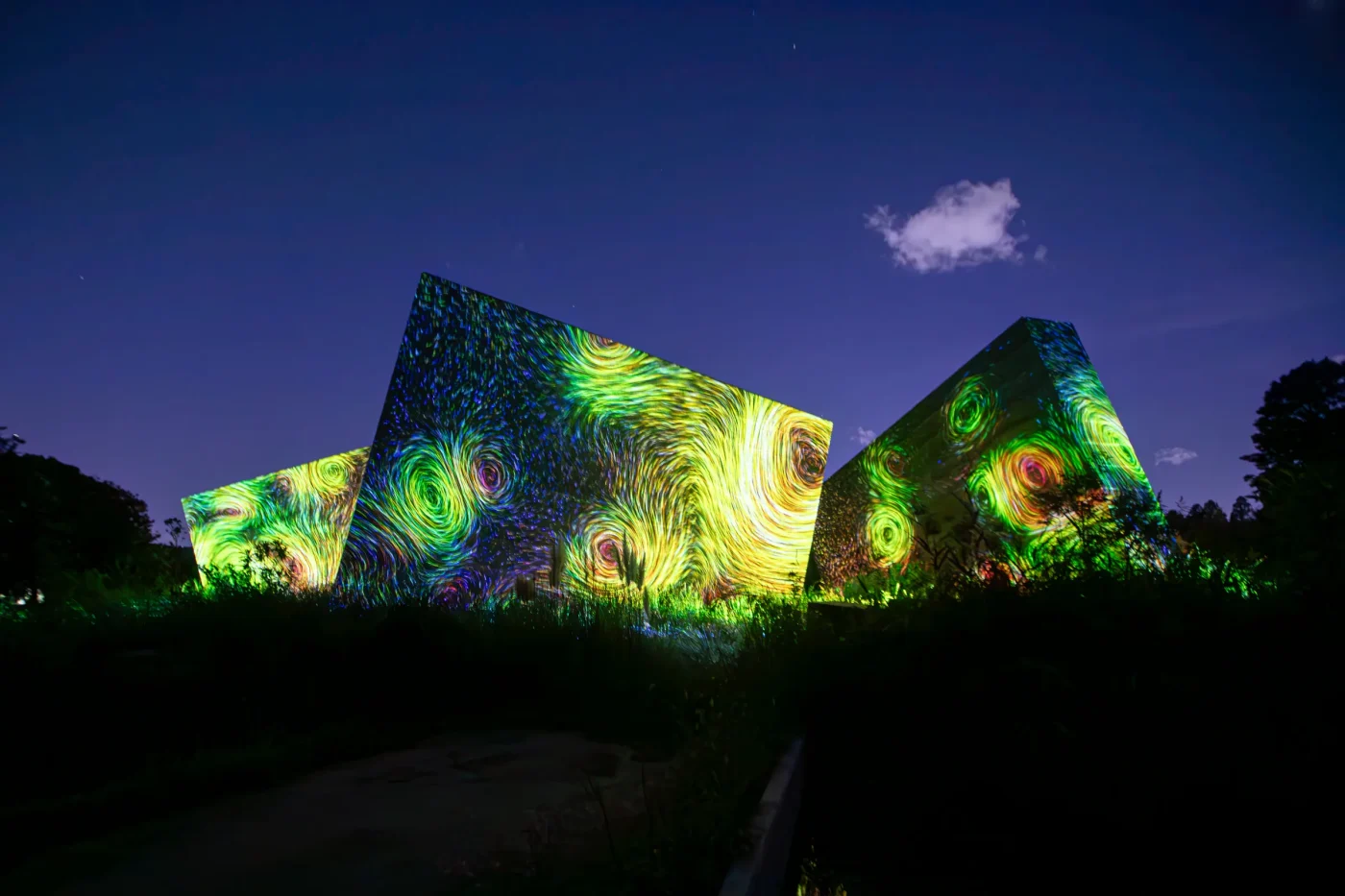
- Optical Projection: Four synchronized 10,000-lumen laser projectors overlay dynamic video mapping onto architectural facades, compensating for uneven surfaces through geometric warping algorithms.
- Coherent Beams: A perimeter of 12 distinct 30-watt lasers casts overhead geometric sheets and aerial tunnels, calibrated to avoid striking surrounding residential corridors or passing aircraft.
- Atmospheric & Pyrotechnic Effects: Directional flame cannons, cold-spark generators, and hydro-pneumatic water jets punctuate musical transients, adding kinetic physical impact.
Core Technical Hardware Specifications
Staging an automated production of this caliber requires precise load calculations and dedicated electrical distribution. The balance between airborne elements and ground effects determines the depth of the visual field.
| System Component | Operational Specification |
|---|---|
| Drone Swarm Deployment | 210 Autonomous Units with Integrated LED Modules |
| High-Output Projection | 4 x 10,000 Lumen Video Units with Geometric Warping |
| Solid-State Laser Array | 12 x 30W High-Powered Beam Units |
| Kinetic Physical Effects | Dual-Fluid Flame Emitters and Cold Spark Machines |
| Fluid Mechanics | Choreographed Dynamic Water Fountains |
| Pixel Integration | Thousands of Individually Addressable RGB Nodes |
Choreographing Swarms, Lasers, and Flame: Step-by-Step
Creating a unified multimedia sequence requires a rigid pre-visualization workflow before any physical hardware goes live on site.
- Audio Stem Mastering and Beat Mapping: The musical track undergoes rigorous dynamic range compression and transient analysis, establishing discrete timecode cue markers for explosive hits, vocal tracks, and ambient transitions.
- Volumetric Drone Flight Path Generation: Drone software simulates collision-free trajectories for all 210 airframes, ensuring clearance margins of several meters between craft while calculating battery discharge curves against wind velocity.
- Surface Mapping and Pixel Grouping: Laser scanners capture building elevations to generate an accurate 3D model, allowing projection mapping software to align animations seamlessly against windows, rooflines, and architectural trim.
- Laser Scan-Zone Masking: Laser safety officers plot strict audience-exclusion masks inside laser-control software, locking hardware beam termination points against structural backstops.
- Live System Dry-Run: The production undergoes silent cue rehearsals, firing digital triggers to verify that cold sparks, water solenoids, and moving-head fixtures track within milliseconds of the core control clock.
Navigating the Myth of Single-Console Control
A frequent misconception surrounding large-scale drone and light displays is that a single off-the-shelf lighting desk controls the entire performance in real time. In reality, modern safety standards prohibit uniting hazardous systems like high-output lasers, open-air propane flames, and unmanned aircraft systems under a single automated push-button program without dedicated hardware failsafes.
Drone fleets operate under isolated ground station control systems with mandatory human visual observers and independent emergency return-to-home protocols. Similarly, laser installations operating in the United States must comply with strict physical shutter interlocks and designated operators who maintain manual beam stops, ensuring zero unauthorized exposure to human eye level or commercial flight paths.
💡 What element of large-scale drone and laser synchronization surprises you the most?
🔍 Have you seen modern drone shows replace traditional fireworks in your local area?
📌 Share this breakdown with fellow audio-visual and tech enthusiasts.
👇 Join the discussion below and let us know your thoughts on the future of holiday entertainment.