
Engineering a Terrifying Haunted House Animatronic: How Robotic Bases Become Nightmare Haunt Props

 Halloween Ideas & Trends
Engineering a Terrifying Haunted House Animatronic: How Robotic Bases Become Nightmare Haunt Props
Building a commercial-grade haunted house animatronic requires converting bare mechanical frames and robotic platforms into terrifying, high-stress props capable of cycling hundreds of times per hour. In professional haunted attractions, an effective scare figure must balance horrifying organic aesthetics with industrial durability, operating continuously across high-throughput autumn operating schedules without structural fatigue.
Achieving that balance demands a seamless intersection of robotics, additive manufacturing, and theatrical creature sculpting. Behind the silicon flesh and distress paint lies a rigorous mechanical discipline where weight distribution, joint torque, and actuator speeds dictate whether a monster shocks visitors or breaks down mid-show.
The Mechanical Core: Adapting Robotic Platforms for Live Attractions
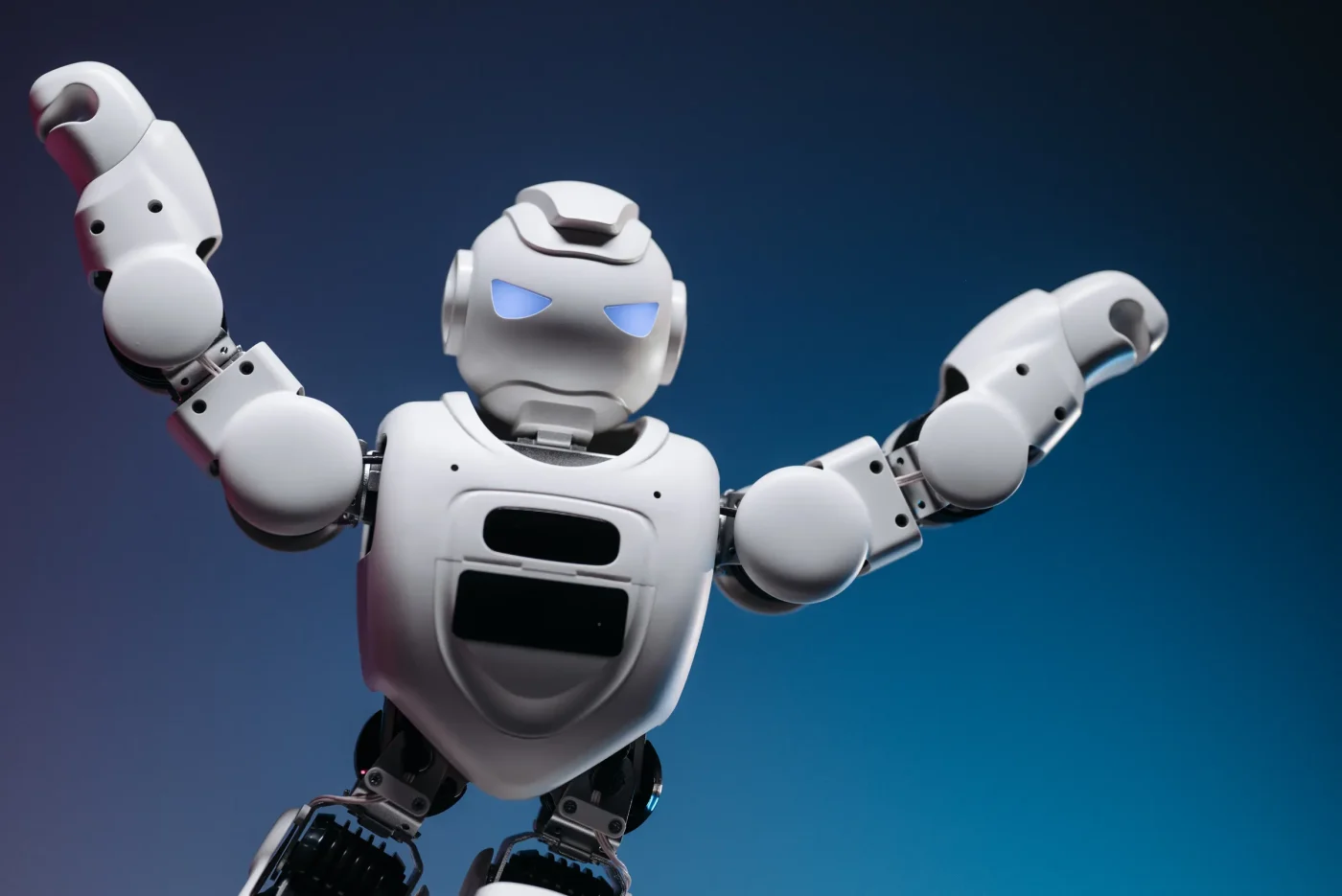
Every convincing scare prop starts with an underlying armature capable of repeatable, lifelike movement. Commercial attractions increasingly look beyond simple pneumatic drop-down mechanisms, turning toward complex motorized armatures, multi-axis servos, and reprogrammed robotic quadrupeds to generate fluid, unsettling locomotion.
Unlike static props or single-action pneumatic rams, robotic bases provide multi-directional motion profiles. A creature that tilts its head, stalks forward on articulated limbs, or tracks visitor movement triggers a deep biological startle response. However, adapting mobile or articulated robot frames for a dark attraction environment requires careful load management. Every added pound of cosmetic silicone, faux fur, or resin teeth shifts the center of gravity and increases strain on gearboxes and electric motors.
Load capacity is the silent killer of animatronic projects; adding unsprung mass to an articulated limb exponentially increases thermal wear on internal drive gears during continuous haunt operations.
To keep dynamic mechanical loads manageable while preserving terrifying anatomical silhouettes, prop builders rely heavily on rapid prototyping and lightweight materials.
Additive Manufacturing: Engineering Skeletal Frames
Modern prop fabrication leverages both filament-based (FDM) and resin-based (SLA) 3D printing to engineer custom bracketry, anatomical skulls, and mechanical rib cages. These digital fabrication methods allow builders to tailor skeletal shells directly to the mounting points of off-the-shelf actuators or robotic platforms.
Large-format FDM printers handle structural framing using tough thermoplastic materials like PETG, ABS, or carbon-fiber-infused filaments that can withstand physical shock. Resin printing simultaneously produces fine-detail organic components—such as hyper-realistic dental work, translucent eye spheres, and segmented claw assemblies—without adding prohibitive weight to dynamic moving joints.
| Engineering Factor | Haunt Floor Requirement |
|---|---|
| Structural Shell Material | High-impact thermoplastics (PETG/Nylon) to absorb cyclic vibration |
| Motion Control | Programmable logic or microcontrollers synchronized to PIR trigger sensors |
| Surface Skinning | Flexible latex or urethane skin reinforced with internal power mesh |
| Thermal Dissipation | Passive heat venting around internal drive motors and power supplies |
Balancing these functional specifications with the physical realities of a busy attraction requires a disciplined, multi-stage construction workflow.
Step-by-Step: Fabricating a Nightmare Prop

Creating a creature capable of terrifying thousands of patrons requires bridging the gap between raw electronics and hyper-realistic creature design through an ordered series of shop stages:
- Chassis Hardening and Kinematic Testing: Strip the stock robotic base or mechanical frame down to its core dynamic structure. Run continuous stress tests to calculate maximum payload thresholds and map safe travel limits for all moving parts.
- Digital Sculpting and Mounting Geometry: Model anatomical features in 3D design software, drafting interior relief pockets that lock securely around the motor brackets without restricting cooling vents or wire harnesses.
- Additive Fabrication and Core Assembly: Print structural skeletal parts using resilient polymers. Secure all structural elements to the chassis with locking hardware and threadlocker to prevent vibrational loosening.
- Skinning and Flexible Muscle Application: Build muscular forms using lightweight upholstery foam, coating the assembly in flexible latex or elastomeric urethane. Reinforce dynamic flex zones with stretchable power mesh to prevent tearing during rapid motion cycles.
- Detail Finishing and Environmental Sealing: Apply acrylic washes, airbrushed creature tones, and realistic wet-look gloss coats. Seal all outer surfaces with flexible topcoats to protect against ambient humidity and fog machine residue.
Integrating these physical components into an attraction also involves adhering to strict public safety and commercial standards.
Public Safety and Electrical Integrity
Commercial haunted houses operate under rigorous local fire safety codes and building inspection requirements. In the United States, organizations like the National Fire Protection Association (NFPA) set guidelines under NFPA 101 (Life Safety Code) regarding flame-retardant materials within amusement structures.
All foams, synthetic skins, and structural fabrics used on an animatronic must be treated with certified flame-retardant sprays or cast from inherently self-extinguishing resins. Furthermore, electrical cabling must be routed away from mechanical pinch points and secured through high-grade strain reliefs to eliminate short-circuit risks in darkened, crowded rooms.
A common misconception is that pneumatic props are universally superior to electric animatronics; while pneumatics deliver blinding speed, modern digital actuators provide nuanced, programmable behavior that creates longer, more suspenseful visitor engagement.
When structural engineering, electronics safety, and grotesque artistry converge, the result is a prop that commands attention while running reliably through every shift.
💡 Have you ever designed custom animatronics or haunt props for your own Halloween display?
🔍 Which mechanical method do you find most effective: high-speed pneumatic shocks or fluid motorized robotics?
👇 Share your experiences and technical fabrication tips in the comments below!