
Google Frightgeist Local Costume Trends: How to Stand Out Without Wearing the Top Pick

 Halloween Ideas & Trends
Interactive search maps reveal local costume clusters across US metro areas.
Using Google Frightgeist local data allows you to pinpoint exactly what everyone else plans to wear before you set foot at a party. While national search leaderboards showcase runaway favorites like Buddy the Unicorn, fidget toy sensation NeeDoh, and Nikki from Obsession, copying the highest-ranked search inevitably guarantees duplicate outfits in your immediate social circle. By navigating the platform’s searchable map strategically, you can identify regional spikes, analyze adjacent creative angles, and assemble an original look that feels culturally relevant rather than mass-produced.
The platform processes search volume across major metropolitan areas, pinpointing localized micro-trends that vary wildly from coast to coast. For example, while national rankings tilt heavily toward breakout viral icons, a specific market like Greater Philadelphia shows strong regional surges for Wolverine, Elsa, Buzz Lightyear, Dr. Frank-N-Furter, and Buddy the Unicorn. Recognizing what dominates your specific zip code is the first step toward dodging the clone trap.
Reading the Local Map to Reverse-Engineer Your Costume
Most partygoers check Google Trends data simply to grab whatever costume sits at the top of the chart. That approach ignores the localized reality of search metrics. Because the Frightgeist tool provides a searchable map of metro-level search interest, you can inspect your exact territory to see which concepts have hit critical mass.
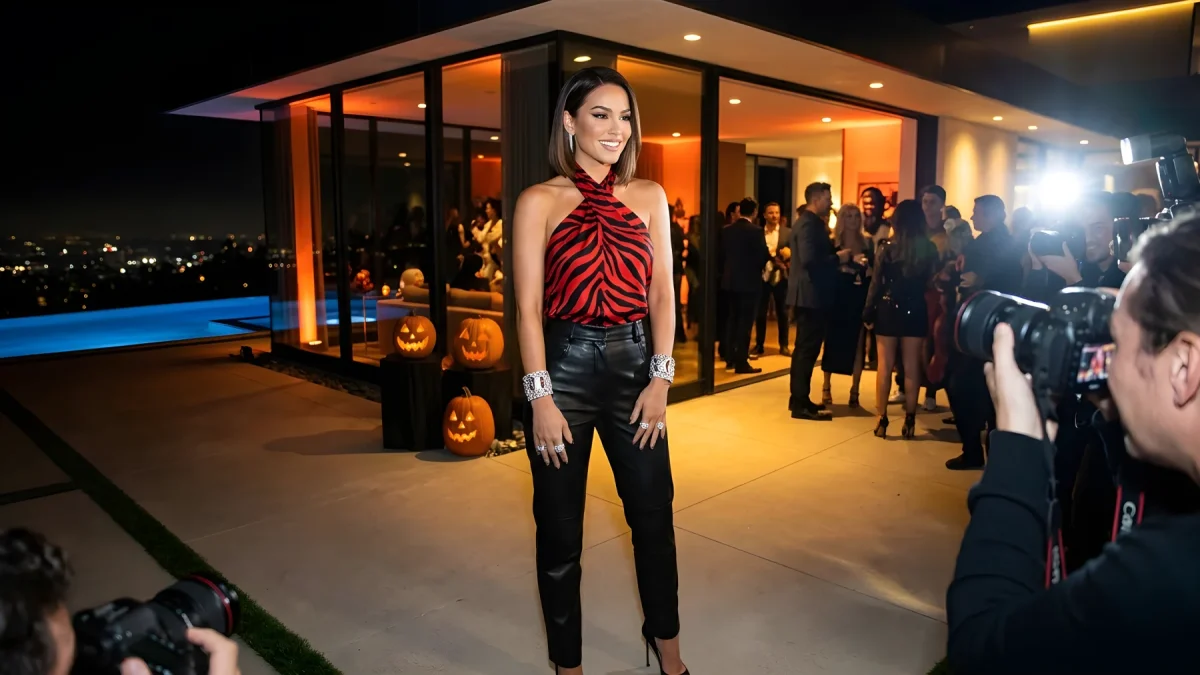
When a specific pop-culture figure spikes in your area, search data often narrows down to iconic wardrobe pieces. In the case of Nikki from Obsession, searches reached record levels specifically for the character’s signature red zebra halter top after the character’s pivotal scene took off. Spotting these precise product searches in your region gives you immediate notice that dozens of guests will show up in identical attire.
A common mistake in practice is treating regional trend data as a shopping list rather than a saturation index.
If the data signals heavy concentration around a leading aesthetic, your advantage lies in stepping one degree adjacent within the same lore or universe rather than abandoning the genre altogether.
Pivot to Supporting Lore and Deep Cuts
Instead of donning the exact headlining look dominating local searches, pivot to the narrative fringe. If regional feeds reflect heavy enthusiasm for Dungeon Crawler Carl, passing over Carl in favor of an alternate reference immediately signals authentic pop-culture literacy.
The same logic applies to leading duo categories. While pairings like Disco Scooby and Shaggy, Cyclops and Jean Grey, or Nikki and Bear crowd the top ranks, pulling secondary or unranked dynamics from the same fictional spaces keeps your costume sharp and distinct.
National Leaders vs. Alternative Counter-Pivots
To avoid matching half the room, consult the highest-ranking search entries on the leaderboard and contrast them with lower-saturation creative alternatives.
| Trending Leaderboard Pick | Low-Saturation Counter-Pivot |
|---|---|
| Buddy the Unicorn | Classic Creature Feature Antagonist |
| NeeDoh Fidget Toy | Retro Tactile Toy Concept |
| Nikki (Obsession) | Film Noir Psychological Lead |
| Agamemnon (The Odyssey) | Odysseus Crew Mariner |
| Disco Scooby Doo | 1970s Mystery Inc. Villain |
| Cyclops & Jean Grey | Danger Room Mutant Duo |
Myth-Busting: Search Volume Versus Real-World Attendance
A persistent misconception among party planners is that high search volume represents actual retail sales. In reality, Google search interest captures curiosity, tutorial browsing, and casual research just as often as direct purchasing intent.
High-ranking search queries show what holds the public imagination, but complicated concepts often see massive drop-offs between casual searching and real-world execution. Conversely, simple, distinct wardrobe items—such as widely available tops or novelty masks—translate directly into crowded rooms. Tracking what is easy to buy versus what is simply searched allows you to predict what will genuinely flood local venues.
Practical Steps to Build a Non-Derivative Outfit
Executing a distinctive outfit using regional analytics requires a systematic filter:
- Audit your local metro area: Search your nearest city cluster on the Frightgeist interactive map to highlight the top five trending looks in your vicinity.
- Flag single-item saturation: Check whether a viral trend relies on an easily sourced hero item, such as a specific patterned shirt or novelty mask. If it does, eliminate that exact piece from your plan.
- Explore duo dynamics in reverse: Review partner costumes like Wall-E and Eve, Woody and Bullseye, or Ricky Bobby and Carley Bobby from Talladega Nights, adopting the styling cues for an unexpected solo twist.
- Target ranks 15 through 50: Scroll past the top ten podium to find recognized pop-culture entities that carry strong nostalgic or visual appeal without the burden of hyper-saturation.
💡 Check your local map data before finalizing any party attire this season.
🔍 Finding the sweet spot between cultural relevance and individual creativity keeps your look memorable.
👇 Leave your thoughts in the comments below and tell us which costume trends you are dodging in your city.