
Michigan Father Fights City Hall to Save Free Halloween Display for Special-Needs Children

 Halloween Ideas & Trends
Michigan Father Fights City Hall to Save Free Halloween Display for Special-Needs Children
A simple three-word Craigslist ad altered Nate Taylor’s autumn routine for nearly a decade: “Free Halloween decorations.”
The 49-year-old stay-at-home dad and part-time DJ answered the post in Traverse City, Michigan. A resident was downsizing after a divorce and looking to rehome 20 years of holiday materials.
Taylor hauled the animatronics and set pieces away over three truckloads. Soon after, he began transforming the 40-foot yard of his Cape Cod-style home near Kid’s Creek Park.

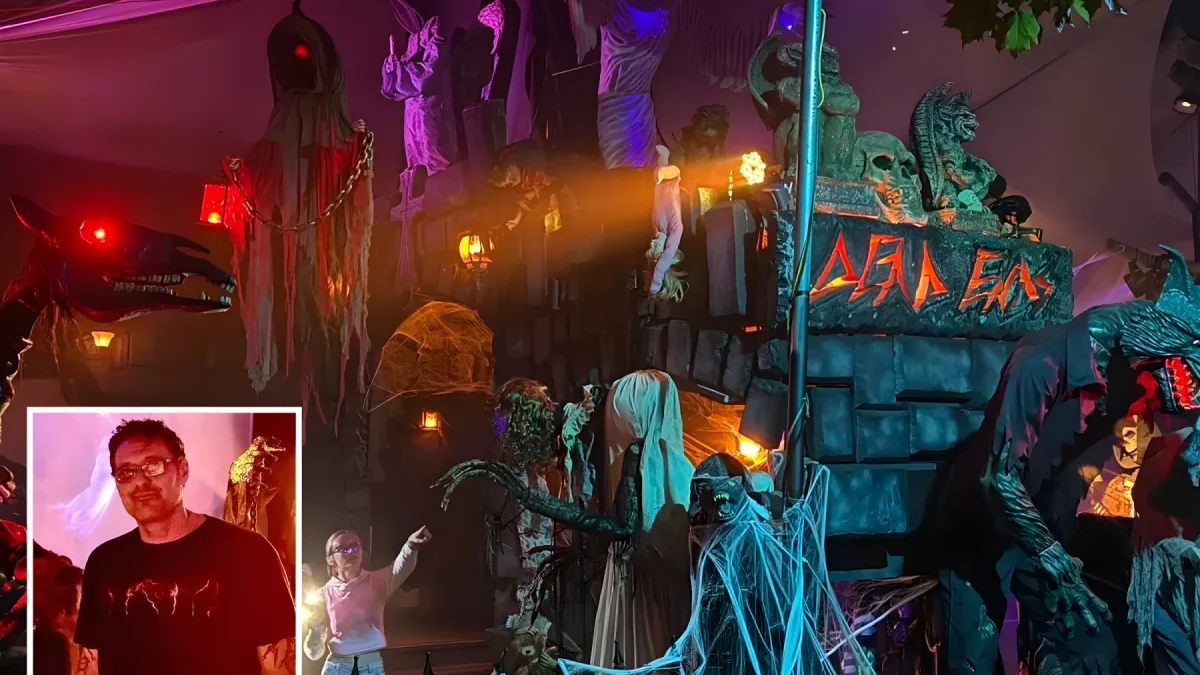
Nate Taylor standing in front of Halloween decorations.
Building an Accessible Halloween Tradition
The setup debuted in 2017 using a temporary tarp anchored to a yard tree to protect non-weatherproof items. Because the house sits near Munson Medical Center, families visiting hospitalized relatives quickly adopted the whimsical exhibit as a quiet retreat.
Taylor deliberately bypassed jump scares and gore. With two children on the autism spectrum, his priority was building an accessible, cost-free experience for neurodivergent and special-needs visitors.
Crowds grew annually. By 2021, evening traffic rose steadily, and by 2024, the walk-through—known locally as “Dead Ends on Spruce”—drew an estimated 18,000 visitors throughout October.
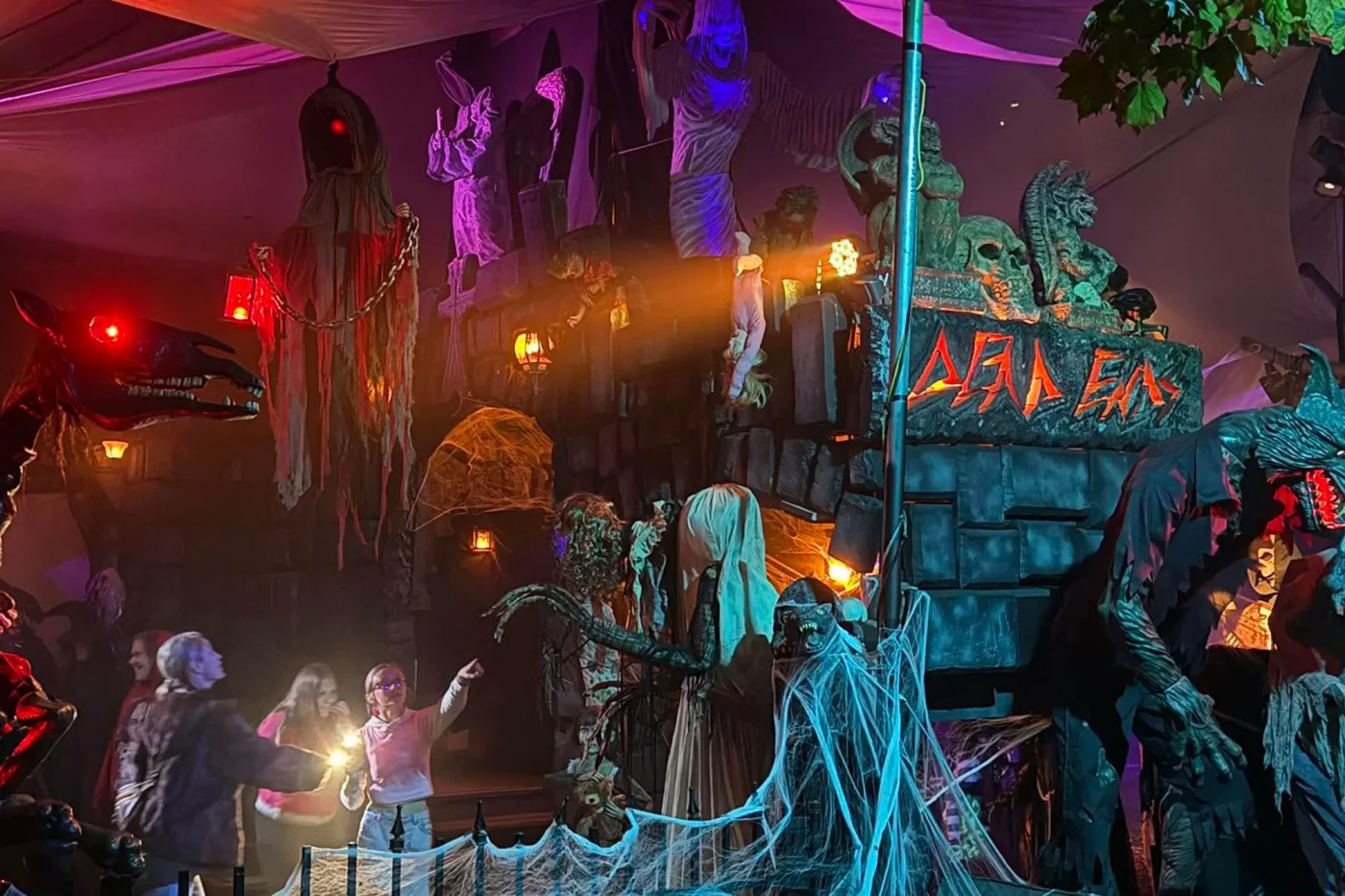
People looking at an elaborate Halloween display featuring ghosts, monsters, and skulls.
To help balance the two-month construction window, Taylor added an optional donation box in 2023 following guest requests, yielding $1,200 toward materials. Admission, however, remained entirely free.
Neighbor Complaints Trigger Municipal Scrutiny
After pausing operations in 2025 while his mother underwent successful treatment for colon cancer, Taylor planned a full return for 2026. Following standard procedure, he contacted code enforcement and the fire marshal in August to arrange safety protocols.
Instead of routine approval, Taylor received a four-page notice from municipal attorneys. A neighbor had reported the house, claiming Taylor was running an illegal commercial venue by charging admission.
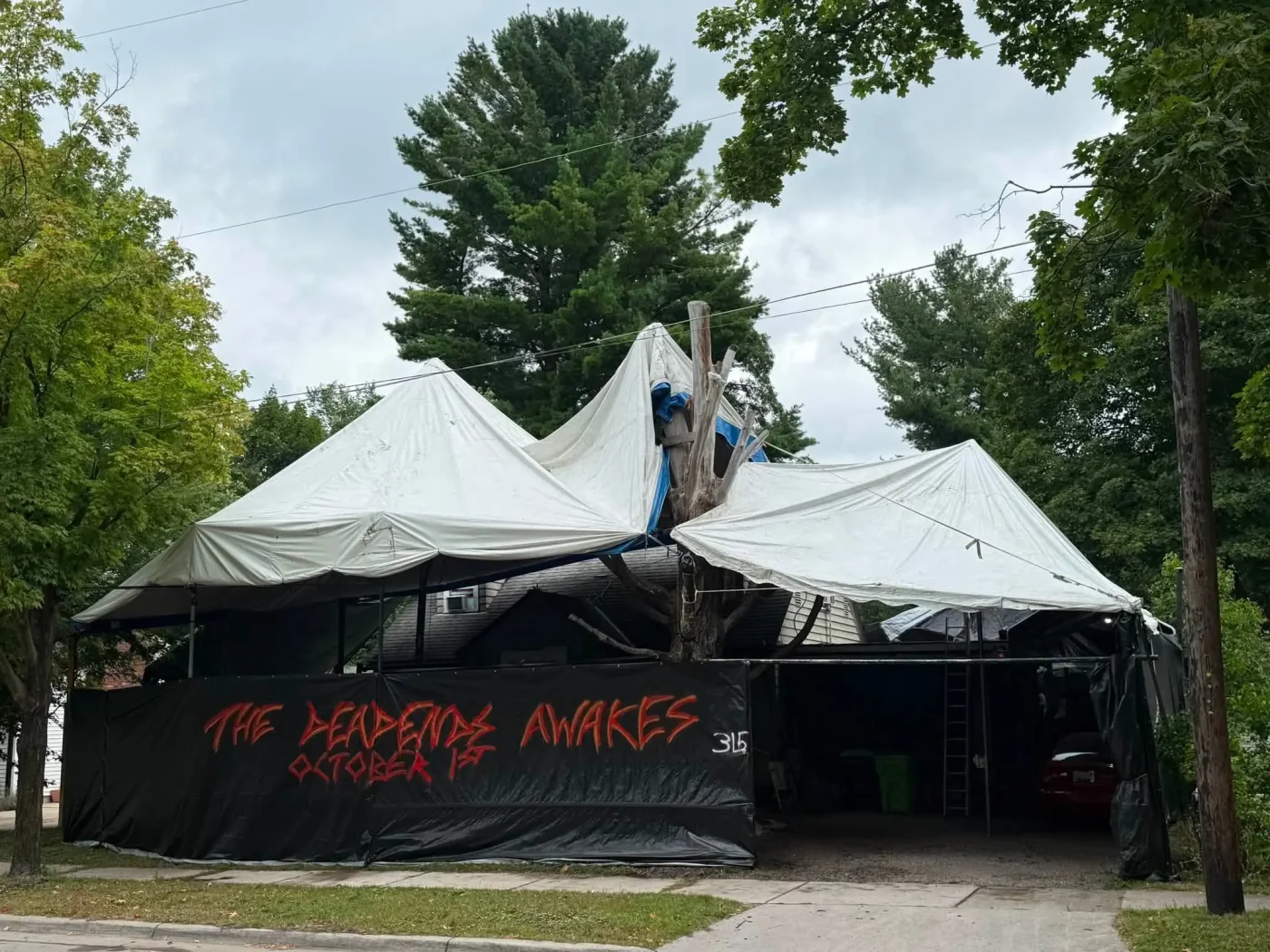
A house decorated with large white canopies and a black banner.
The city’s letter highlighted strict home-occupation limits, including a rule capping parking turnover at eight vehicle trips at any single time.
Taylor contested the commercial classification, noting that spread across 30 days, neighborhood traffic matched a typical weekend garage sale. He had also capped sound levels, implemented a 10 p.m. curfew, and angled lighting away from surrounding houses.
Pushing Forward Despite the Clash
After municipal officials failed to investigate the ticket-sale claims in person, three local attorneys offered Taylor pro bono assistance. Counsel delivered a formal letter requesting that the city clarify its legal intentions before mid-September.
The city never replied.
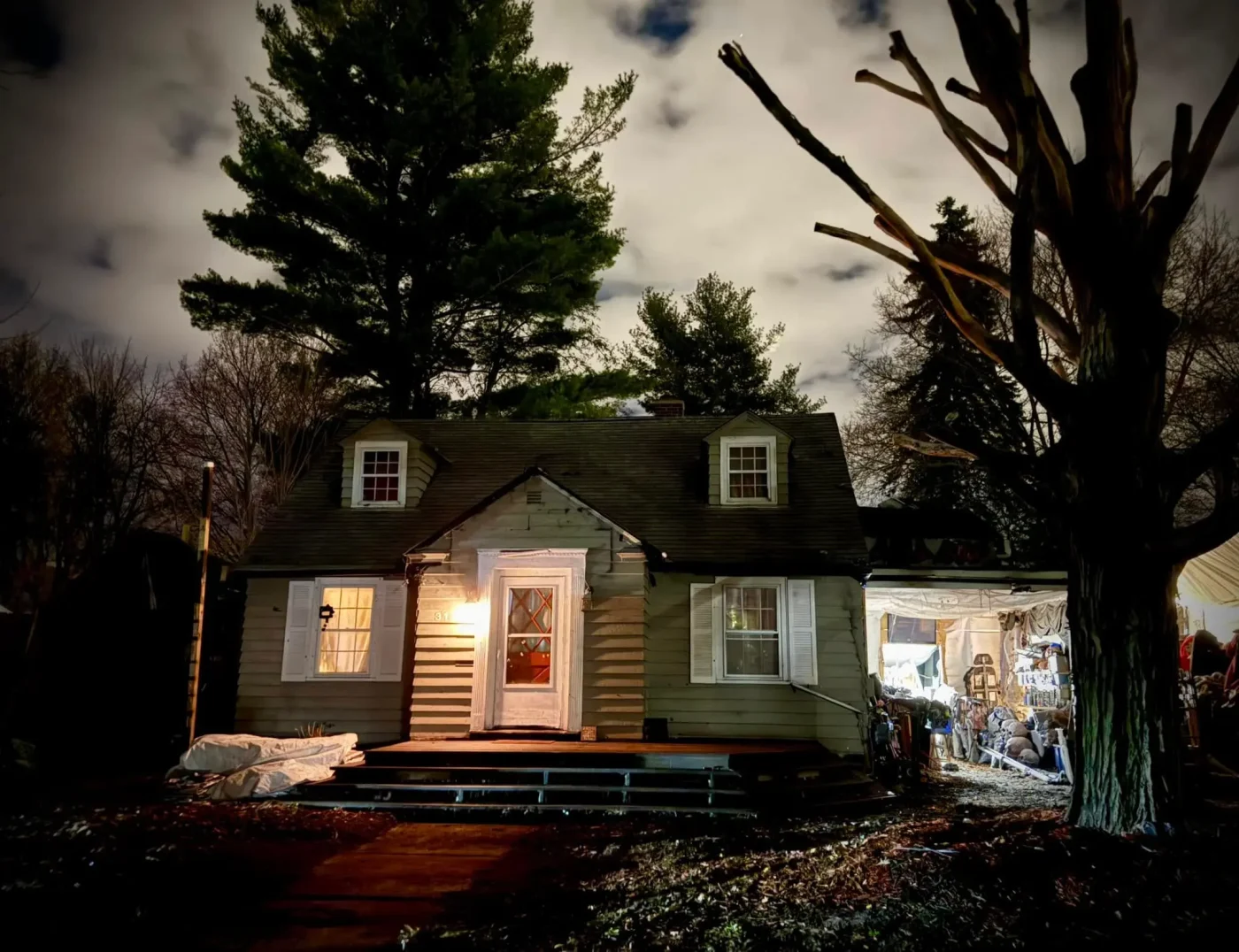
A small, single-story house lit up at night.
With no formal shutdown order issued, Taylor opened the attraction as planned. Opening night brought roughly 400 attendees, and daytime walkthroughs were reserved for 25 separate special-needs groups.
The expanded layout features 25 large-scale animatronics, 40 directional sound speakers, and 400 feet of buried lines feeding an integrated fog system, with projected attendance targeting 25,000 visitors.