
Hidden Halloween Candy Risks: Why Alpha-Gal Syndrome Is Changing Trick-or-Treating

 Halloween Food & Parties
Nonfood treats and teal pumpkins help protect children with severe food allergies on Halloween.
For most children, trick-or-treating is the highlight of autumn. For families managing alpha-gal syndrome, however, standard candy buckets pose serious medical hazards.
The condition, typically triggered by bites from the lone star tick, causes an allergy to mammalian meat and animal-derived ingredients. Exposure can cause reactions ranging from mild hives to life-threatening anaphylaxis.
The Hidden Ingredients in Everyday Treats
Many classic Halloween sweets rely heavily on animal byproducts that can trigger an alpha-gal reaction. Standard chocolate bars frequently contain milk, butter, or casein.
Chewy treats present their own risks. Gummy candies often use gelatin, which is derived from animal collagen, while some recipes include carrageenan or marshmallow bases that may provoke sensitivities.
Because ingredient formulations change frequently, reading packaging labels remains critical before handing any treat to an allergic child.
Safer Edible Alternatives
Vegan-certified treats eliminate animal byproducts entirely, making them a far safer choice for households expecting trick-or-treaters with alpha-gal syndrome.
Reliable alternatives include:
- Pure fruit chews and candied fruits
- Hard candies and lollipops
- Vegan-formulated chocolate bars
- Traditional licorice and plain roasted nuts
Why Nonfood Giveaways Are Gaining Ground
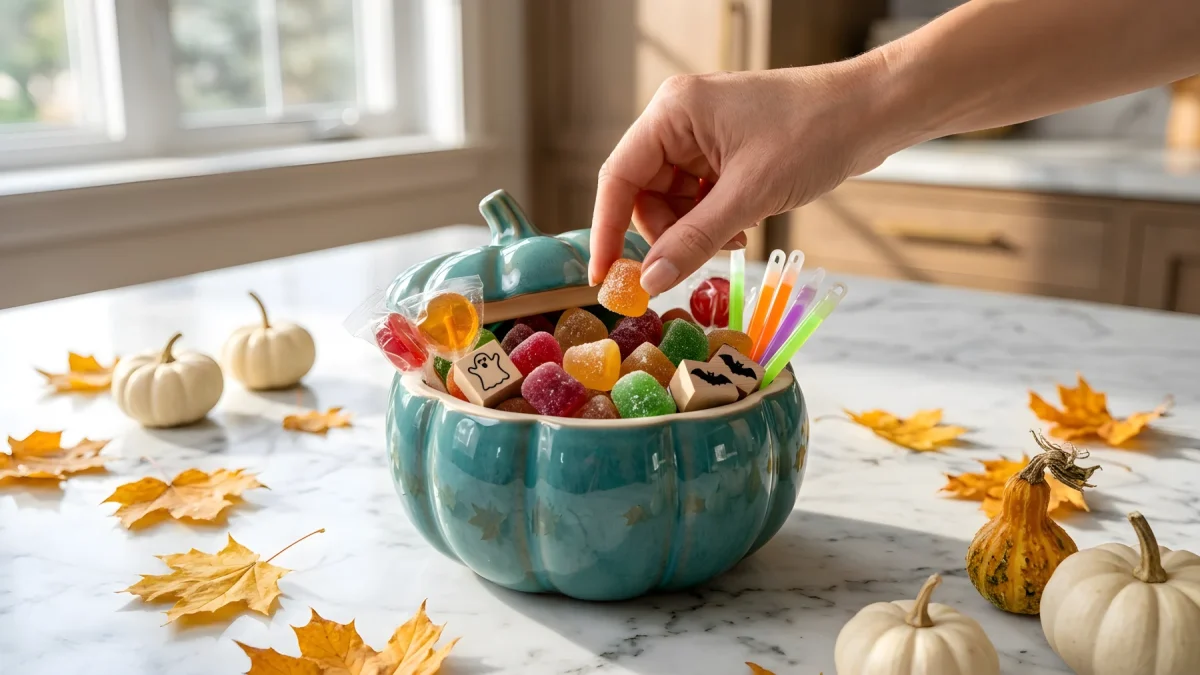
To avoid food risks entirely, an increasing number of neighborhoods are turning to nonfood handouts. Small items like stickers, glow sticks, temporary tattoos, and novelty school supplies allow every child to participate without health concerns.
This approach aligns with the national Teal Pumpkin Project, run by Food Allergy Research & Education (FARE). Placing a teal pumpkin or light outside signals to trick-or-treaters that a home offers safe, nonfood options.